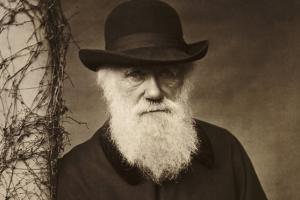
Do Charles Darwin's Private Letters Contradict His Public Sexism?
The Guardian
With advances in genome sequencing and computational tools to analyze genomic information, researchers are able to estimate that about 8 percent of the human genome is made of sequences that originated as invasive retroviruses. To put that number in perspective, genes make up about 1 percent to 1.5 percent of your genome.
Its complex politics and vibrant music have attracted the attention of the world. But Cuba, the largest island nation in the Caribbean, is also home to the unexpected. It’s a place of stunning contrasts: mysterious caves and bright boulevards, sweltering fields and cool forests, hard challenges and high energy.
Stone flakes made by capuchin monkeys look remarkably similar to stone tools made by early humans 2-3 million years ago, raising questions about the archaeological record.
In past research, apes consistently failed on tasks designed to assess their understanding of others’ false beliefs. They did’t seem to know when someone has an idea about the world that conflicts with reality. But in a new study involving 40 bonobos, chimpanzees and orangutans the apes were able to anticipate that an actor would behave in accordance with a false belief.
In 1953 scientists investigating Piltdown Man, an alleged "missing link" between modern humans and apes, concluded that it was a fake. But their investigation couldn't answer the question: Who had done it, and why? Many suspects have been proposed, but we now finally know the culprit in this long-standing mystery.
Spread the word