More than Economics: TPP, Empire and Common Security Alternatives
Common Dreams
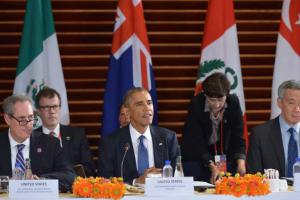
Economist Jared Bernstein recently sat down with Capital & Main to offer his perspective on a wide range of political and income-inequality topics. Formerly a top advisor to Vice President Joe Biden and, currently, a senior fellow at the Center on Budget and Policy Priorities, Bernstein spoke to us again, following the U.S. Senate vote to fast-track the Trans-Pacific Partnership. The interview has been edited for brevity and clarity.
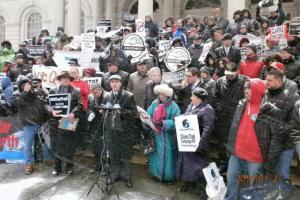
TPP is a corporate power grab clearly worthy of Seattle-caliber mobilization. But the fight against this reprehensible deal requires different types of tactics. And the place to start is by derailing “Fast Track,” the mechanism that would allow TPP approval to rush through the U.S. Congress with little debate and no amendments.
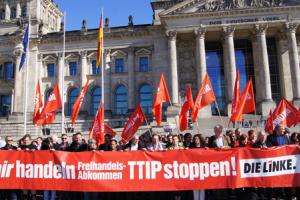
TTIP does away with “barriers” that impede the intercontinental flow of goods. This will make it easier for companies to base their production facilities on “cost” grounds, especially social ones. Workers’ entitlement to be involved will still stop at the border. TTIP will therefore mean a weakening of workers’ rights, despite guarantees under the EU’s Charter of Fundamental Rights.
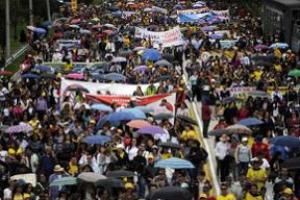
Strikes, demonstrations and protests are at a record pace in Colombia this year as workers seek a bigger share of wealth generated by the country’s expanding economy. After 50 years of guerrilla warfare, the government’s success in weakening illegal armed groups has drawn investment and rewarded businessmen, while the gap between rich and poor remains considerable, according to the World Bank’s Gini index of income distribution.
Spread the word