Labor Day 2020: What Is the Future for Healthcare Workers?
Portside

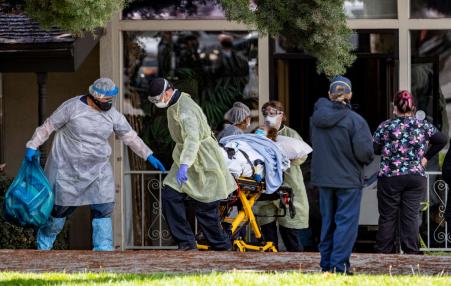
Every day at 7pm hundreds of thousands of New Yorkers stand at their balconies and windows to clap for three minutes for those working on the frontline of the fight against coronavirus
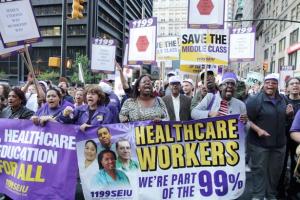
A majority of union members today now have ties to a government entity, at the federal, state or local levels. Roughly 1-in-3 public-sector workers is a union member, compared with about 1-in-15 for the private-sector workforce. The typical union worker now is more likely to be an educator, office worker or food or service industry employee rather than a construction worker, autoworker, electrician or mechanic. Far more women than men are in unions.
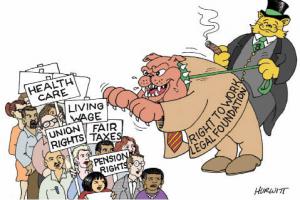
If the U.S. Supreme Court rules in favor of a lawsuit filed by the National Right to Work Legal Defense Foundation, every state in the country would essentially turn into an anti-union "right to work" state, which would be a significant blow to public sector unions' collective bargaining efforts and also complicate thousands of existing contracts between organized workers and municipalities, cities, counties, and states across the country.
A new report put out by Public Citizen found that in 2010, healthcare workers (including hospital staff) reported 653,900 workplace injuries and illnesses. That’s approximately 152,000 more (a 432 percent higher rate) than the industry with the second highest number of injuries—manufacturing—even though the healthcare sector is only 134 percent larger than the manufacturing sector.
Spread the word