The Political Roots of Widening Inequality
The American Prospect
Some 11% of all wage and salary workers in 2014 were in a union — down from 22% in 1983 after peaking at nearly 35% in 1954, according to Bureau of Labor Statistics data. The fall in union membership is a significant contributor to the rise in inequality since the 1970s, says John Schmitt, senior economist at the Center for Economic and Policy Research, a nonprofit left-of-center think tank in Washington, D.C., although there’s no single cause of the economic inequality.
Thousands of peace, social justice and environmental activists from around the world will gather in New York City from April 24-26 for the Peace and Planet Mobilization for a Nuclear-Free, Peaceful, Just and Sustainable World - challenges articulated by Dr. Martin Luther King. Peace and Planet convenes prior to the April 27 - May 22 Nuclear Non-Proliferation Treaty Review Conference at the United Nations, bringing the voice of civil society to the governmental confab.
Globalization and technology have gutted the labor movement, and part-time work is sabotaging solidarity. Is there a new way to challenge the politics of inequality? Tackling inequality is clearly going to require more than technocratic fixes from above. It isn’t likely to succeed unless workers themselves can reclaim some bargaining power, and the sense of political and social inclusion that can go with it.
In this article Kristof acknowledges he was wrong about unions - As unions wane in American life, it’s also increasingly clear that they were doing a lot of good in sustaining middle class life — especially the private-sector unions that are now dwindling. "To understand the rising inequality, you have to understand the devastation in the labor movement,” says Jake Rosenfeld, a labor expert at the University of Washington and the author of “What Unions No Longer Do.”
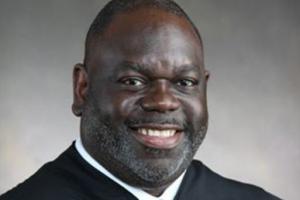
Here's an astonishing speech by U.S. District Judge Carlton Reeves, one of just two African-Americans to have ever served as federal judges in Mississippi. He read it to three young white men before sentencing them for the death of a 48-year-old black man named James Craig Anderson in a parking lot in Jackson, Miss., in 2011. They were part of a group that beat Anderson and then killed him by running over his body with a truck, yelling "white power" as they drove off.
Of course it’s the same struggle: “It’s the same people,” says Saru Jayaraman, the director of the Food Labor Research Center at the University of California, Berkeley. “Young people working in fast food are the same people as those who are the victims of police brutality. So the Walmart folks are talking about #blacklivesmatter and the #blacklivesmatter folks are talking about taking on capital.”
Spread the word