Organizing New York
Jacobin
Reader Comments- Jobs and Higher Wages; Boehner, Netanyahu, Israel, Iran; Martin Luter King - radical anti-capitalist; Charlie Hebdo - racism, nationalism, free speech; Broken Criminal Justice system; Social Security, Disability; Erosion of Collective Bargaining = Income Inequality; Podemos; Solidarity Forever; Selma; Guantanamo protest; Roe v. Wade Anniversary;
Announcements- Forums- Ending the Embargo of Cuba; After The Greek Elections; March Delegation to Venezuela
“Solidarity Forever” echoes symbolically this Martin Luther King Jr. Day weekend. Dr. King’s last sermon was delivered in Memphis during the sanitation workers strike, a strike in which he acted not just as a civil rights leader but also a union leader. He even called for a general strike of black workers and students in Memphis.
Reader Comments: Congress Plots to Undermine Retiree Pensions; Is It Bad Enough Yet?; Angela Davis: the unbroken line of police violence; James Baldwin on Racism; LAWCHA's Teacher/Public Sector Initiative; #BlackLivesMatter Takes the Field; They Fear and The Kill; Thousands March to Protest Police Brutality; Torture - Senate Report, Lessons from Latin America; Trade; Chanukah 2014;
CELEBRATING CHARLIE HADEN memorial and celebration of his life - New York - Jan. 13
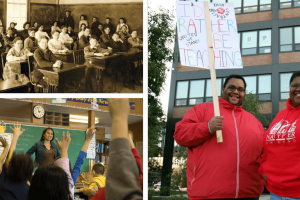
LAWCHA sponsored a Teachers/Public sector history committee that has produced an overview of teacher organizing and a bibliography of resources to understand that effort in historical context. We have provided powerpoints graphs and annotations of material organized by geography and specific unions.
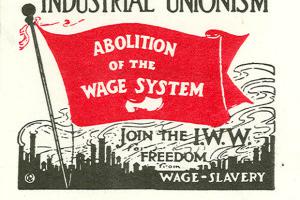
At its peak in August 1917 the IWW had a membership of more than 150,000. Nine months later, the union was in total disarray. This sad state of affairs was, of course, partly the result of a calculated decision by the federal government to destroy the IWW. But only partly. Eric Chester's book looks at some the inner-conflicts within the organization that contributed to its demise.
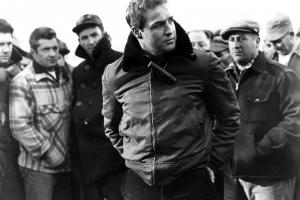
Though the bitterness against Kazan has lingered lo these many years, we in working-class studies should reclaim On the Waterfront as one of the important texts for understanding what happened to American labor in the postwar period. We do so not to redeem Kazan, but to honor the workers that he and Schulberg were trying to represent.
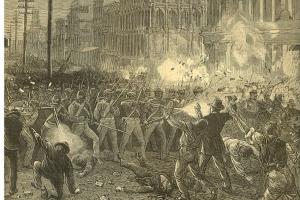
The six-week-long "Great Railroad Strike" involved an estimated 100,000 workers in more than a dozen states, and succeeded in paralyzing much of the nation’s transportation system. The strike was brutally crushed by state and federal troops with more than 100 dead and thousands injured. The strike itself may have failed to achieve the B&O employees’ original goal of wage restoration, but it stimulated the growth of unions, particularly among rail workers.
Spread the word