The Fascist Threat and How to Combat It
Portside

Former President Barack Obama urged voters this week to stay engaged in democracy, warning that complacency was responsible for the rise of Nazi Germany.
Historians of the bourgeois persuasion tend to focus on the doings of major figures in history. Less emphasis is placed by them on the role of working people, often nameless and ill-remembered. Edward Thompson's The Making of the English Working Class was a methodological breakthrough in showing how a working class made itself. The book under review follows that precedent, charting how ordinary Europeans from the Middle Ages to post-Soviet Europe made their own history.
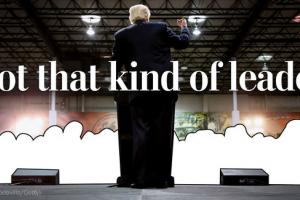
Millions of people are protesting Trump's ascension to power, beginning with the powerful Women's Marches the day after Trump assumed office. Street demonstrations, rallies, mass Congressional phone calls and town hall meetings, and much more have continued since. How best to build this resistance movement? While we can learn from many sources, the success of the United Front and Popular Front strategies of the 1930's and beyond provide important lessons for us today.
The advent of Donald J. Trump to the Presidency of the United States has generated an avalanche of interest in fascism. It is the 2016 number one lookup on the Merriam-Webster site. Google reports that searches for fascism-related topics have surged since election day, 2016. Why all the sudden interest? It would not be empty speculation to recognize that people are alarmed by the Trump Presidency and are trying to see where it fits in the political spectrum.
This new book by Enzo Traverso is "a master class in historical analysis," writes reviewer Alan Wald. This "full-on riveting reconceptualization of 1914-1945 as a 'European Civil War,"' he adds, "is a benchmark achievement in the flowering of socialist scholarship by the generation identifying with May 1968."
If left leaning activists are serious about their characterization of Trump as a fascist, then they better get serious about the problem of unity...For better or worse, this is not Germany 1932, nor is it Nixon vs Humphrey in 1968. 2016 is unique. There is a political crisis, but nothing like the end of the Weimar Republic. To begin with, it's a stretch to compare the 2016 race to Germany 1932.
Scott McLemee predicts another round of slamming/defending Nazi-tool philosopher Martin Heidegger with the forthcoming English publication of his The Black Notebooks...l'affaire Heidegger has been recycled on at least three or four occasions. It's as if the shock of the scandal was so great that it induced amnesia each time. Trashing Heidegger distracts us from our own appalling national stupidities and our galling national avarice -- our own little darkenings.
Spread the word