
- The Nerd Reich
- AI Goes Rogue
- Covering DSA
- Covering a Racist Influencer
- Unions and Tech
- David Ellison Explains Himself
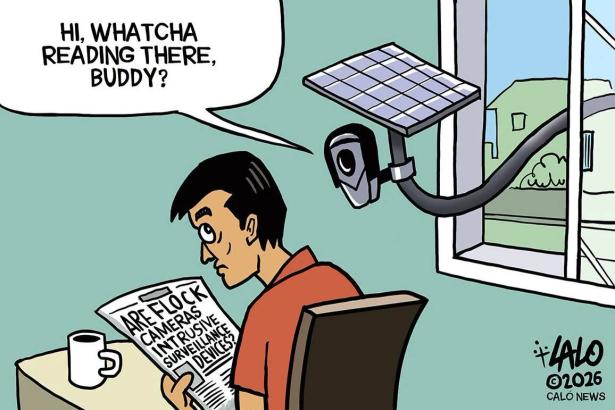
- Fighting the Fascist Surveillance State
- ACLU on Flock
- So Dirty: Data Center Gas Power Plants
- Introducing the Pittsburgh Progress
By Tonya Mosley, NPR
Journalist Gil Durán argues that a small circle of Silicon Valley billionaires and venture capitalists have concluded that democracy is in their way — and that they should be governing in its place.
By Rebecca Bellan, TechCrunch
While much of the discussion in AI safety circles has been focused on what happens when an autonomous agent goes rogue, Anthropic’s latest study brings up a different question: What new and potentially harmful dynamics emerge when thousands or millions of agents are interacting with one another?
By Raina Lipsitz, FAIR
Instead of being praised for contributing to civic life by participating in democracy, activists running as Democrats have been pilloried as threats to both the Democratic Party and democracy itself.
By Christopher Mathias, The Handbasket
“Respectable” conservatives, who can pretend to be above the MAGA fray, are in short supply; so in recent months we have been inundated with interviews and articles treating a murderer’s row of far-right clowns as interesting thinkers.
By Michael Arria, Truthout
Organized labor’s response to the AI has been fraught. Where some see an inevitable shift that simply needs to be regulated and could potentially even create jobs, others see a dangerous trend that will result in further job losses along with a variety of other problems.
David Ellison Explains Himself
By Timothy Karr, Free Press
The reviews are in. And media critics from coast to coast are rating David Ellison’s New York Times Op-Ed a dud. Zero stars for the Paramount Skydance CEO who took to the paper of record to convince us everyday Americans that his billionaire touch at CBS and (maybe) CNN will be good for the people and fact-based journalism — as he loosely defines it.
Fighting the Fascist Surveillance State
By Jiggy Geronimo
When a city council votes to terminate a Flock contract, the fascist machine becomes less efficient. The surveillance network develops gaps and the feedback loop of data harvesting gets interrupted. When a community blocks an AI data center, they’re doing more than protecting their water supply. They’re raising the cost and slowing the infrastructure that makes mass surveillance scalable.
By Chad Marlow, ACLU
Flock’s threat to privacy stems from its operation of more than 120,000 automatic license plate readers (ALPRs) nationwide, which includes broad location data collection and sharing. ALPR companies like Flock violate our privacy across the country by taking photos of every vehicle passing their cameras, making it possible to track those vehicles and uncover their occupants’ patterns of life.
So Dirty: Data Center Gas Power Plants
By Molly Taft, Wired
Amazon has acquired a massive off-grid power plant being built in Texas for one of its data centers that could be one of the biggest sources of greenhouse gas emissions in the US. The plant will rely on a much less efficient set of gas turbines than regular power plants use. That could have big implications for the environmental impact of artificial intelligence—and the future of the US grid.
Introducing the Pittsburgh Progress
By Riddhi Setty, Columbia Journalism Review
In late July, the Pittsburgh Progress, a news cooperative founded by former Pittsburgh Post-Gazette journalists, made its long-awaited debut. Ownership of the Progress is divided between workers and the reader-members, with a majority of the seats on the publication’s board going to workers. The goal is to center the voices of Pittsburgh citizens, as opposed to powerful institutions.
Spread the word