United States v. Davis – Wrestling With the Third Party Doctrine

Elizabeth Goitein Just Security
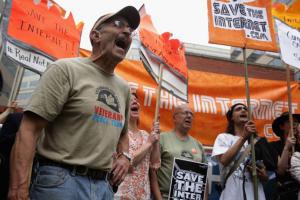
Even if it were true that cell phone users “voluntarily” disclose their location, it strains credulity to argue that, simply by virtue of putting a cell phone in their pocket, they voluntarily disclose “a wealth of detail about their familial, political, professional, religious, and sexual associations.”

As Encryption Spreads, U.S. Grapples With Clash Between Privacy, Security

Ellen Nakashima and Barton Gellman The Washington Post
“I don’t believe that law enforcement has an absolute right to gain access to every way in which two people may choose to communicate,” said Marc Zwillinger, “And I don’t think our Founding Fathers would think so, either. The fact that the Constitution offers a process for obtaining a search warrant where there is probable cause is not support for the notion that it should be illegal to make an unbreakable lock. These are two distinct concepts.”

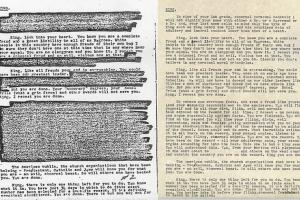
FBI's "Suicide Letter" to Dr. Martin Luther King, Jr., and the Dangers of Unchecked Surveillance

Nadia Kayyali Electronic Frontier Foundation
Should intelligence agencies be able to sweep email, read texts, track calls, locate us by GPS? Much of the conversation swirls around the possibility that agencies like the N.S.A. or the F.B.I. will use such information not to serve national security but to carry out personal and political vendettas. King’s experience reminds us that these are far from idle fears, conjured in the fevered minds of civil libertarians. They are based in the hard facts of history.

Snowden Speaks

The Nation
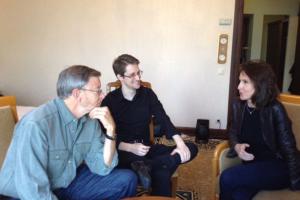
Katrina vanden Heuvel and Stephen F. Cohen of The Nation offer a peek at their recent interview with Edward Snowden. Spencer Ackerman of The Guardian reviews Citizenfour, Laura Poitras' new documentary on Snowden.

Own Your Own Data

Larry Hardesty Massachusetts Institute of Technology
A new system would allow individuals to pick and choose what data to share with websites and mobile apps.

Edward Snowden: How We Take Back the Internet

Appearing by telepresence robot, Edward Snowden speaks at TED2014 (Mar 18) about surveillance and Internet freedom. The right to data privacy, he suggests, requires a fundamental rethink of the role of the internet in our lives — and the laws that protect it. Chris Anderson interviews, with special guest Tim Berners-Lee.
 
Subscribe to privacy