Strike Through: How Teachers’ Unions Are Re-Writing Seattle’s Education Game Plan
Seattle Weekly
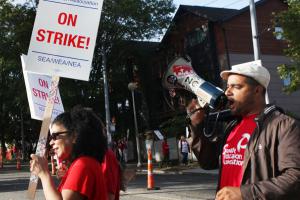
When, in 1976, New Jersey was in a similar situation [to Washington], the Supreme Court shut down the schools for eight days. The fruits of that conflict remain with New Jerseyites to this day, for the need to fund schools more fairly is what led New Jersey in 1976 to adopt a state income tax for the first time.
Kshama Sawant, the socialist on the City Council, is up for re-election this year. The corporate powers, from Seattle’s mayor to the Chamber of Commerce and the area’s Democratic Party, are determined she be defeated, and these local corporate elites have the national elites behind them. This will be one of the most important elections in the country this year.
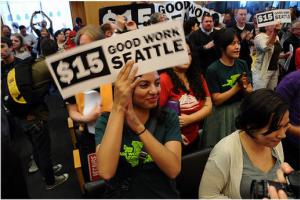
New Mayor Ed Murray says, “We know it is not a matter of if we get to $15 per hour, but when and how we get there.” All nine city council members publicly endorse the concept. But underneath the apparent consensus are differences on what $15 means and how long it should take. So labor and community groups in Seattle are mobilizing to hold the council’s feet to the fire—and to get the job done by ballot initiative if the council compromises too far.
In the years since the destruction of the occupations, the critique of inequality has only broadened and deepened in the U.S. Occupy should claim credit for getting it on the map, while political iterations old and new have been keeping it there. Today, the fight against inequality is taking greater institutional shape, and seemingly exerting more leverage, in places inspired by Occupy but moving beyond its initial tactics.
Spread the word