Frequency, Size of Labor Disputes Up In 2015 For First Time In Years
District Sentinel
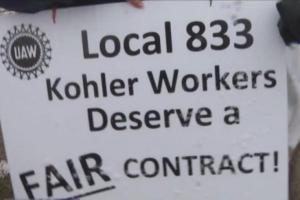
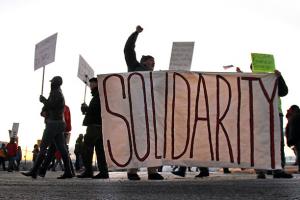
The Kohler plant has a history of intense battles, including a 1934 strike which resulted in the formation of a company union. After the workers abandoned company unionism for the UAW, one of the longest strikes in U.S. history commenced in 1954. Every time these battles are lost, it sends message that unions can’t defend their members and the union movement is dead. Conversely, when workers win these fights, confidence in labor grows and organizing becomes a bit easier.
Local 1021’s model Strike School, which In These Times has obtained and posted online (links below) as an open source document, is designed to educate workers about the true nature of class politics and class conflict, the power of the strike, how to organize and win a strike and how to use the strike as part of a larger social movement. It is divided into three modules: “Economic Power,” “Striking for Our Communities,” and “Strategic Planning,” ...
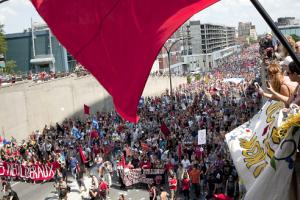
A “coalition of coalitions” -- comprising unions, students, and several other sectors, even including elected municipal officials -- has coordinated movements of protest over the past years and is leading toward a great day of action on May Day. Beyond that several actions are planned for over the course of the summer eventually leading to an important workers’ strike next fall.
Despite being a fundamental human right enshrined in international law, the right to strike is certainly not guaranteed for all workers. In fact, transport workers are one of the groups increasingly being excluded from the right to strike by way of outright bans or public service, essential services or minimum services requirements that severely limit that right.
The tentative agreement reached between the ILWU and the Pacific Northwest Grain Handlers Association (PNGHA) would impose a major reduction in working conditions and shop floor power, including the loss of the union controlled hiring hall, and no overtime pay until after 12 hours. The agreement would prevent work stoppages because it would allow the employer the right to use its own managers to replace union workers during work stoppages.
Spread the word