Should Billionaires Exist?
Africa is a Country

Piketty’s new book, “A Brief History of Equality,” is perhaps his most optimistic work. Piketty proposes a truly radical policy agenda — a universal minimum inheritance, worker control over the boards of corporations and “confiscatory” levels of wealth and income taxation — that he calls “participatory socialism.”
Piketty's radical and largely on-target critique of contemporary capitalism, the reviewer says, was mostly greeted with hostility by the economics establishment, when not simply ignored, stonewalling Capital in the Twenty-First Century, so it would not have the impact on economics research agendas that it merits, particularly in explaining inequality — in effect a dead zone in mainstream economic analysis. The reviewer thinks much can be gleaned from Piketty's work.
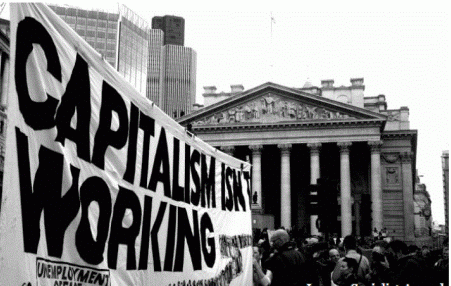
Rising inequality is largely to blame for this electoral upset. Continuing with business as usual is not an option. People have lost their sense of security, status and even identity. This result is the scream of an America desperate for radical change. People have a right to be angry, and a powerful, intersectional left agenda can direct that anger where it belongs. Thomas Piketty and Naomi Klein offer up interesting analysis.
Spread the word