Tidbits - April 3, 2014
Portside
Fast track or not, TPP is a bad deal for the country. You'll hear a lot in the coming days about free trade creating jobs. Never mind the rhetoric. The first question you should ask is, "Who's going to get rich?" The short answer is: not you. This "deal" is just the latest example of corporate interests stacking the deck against working families. It's happened before, and it's happening again under our noses.
Since 2000, the Latin American region as a whole has increased its growth rate to about 1.9% annually per capita – not like the pre-1980 era, but a serious improvement over the prior two decades when it was just 0.3%. But Mexico hasn't joined in this long-awaited rebound: its growth has remained below 1%, less than half the regional average, since 2000. And not surprisingly, Mexico's national poverty rate was 52.3% in 2012, basically the same as it was in 1994 (52.4%).
Treaty negotiated in secret between 12 nations 'would trample over individual rights and free expression', says Julian Assange. WikiLeaks released the secret negotiated draft text for the entire TPP (Trans-Pacific Partnership) Intellectual Property Rights Chapter. The TPP is the largest-ever economic treaty, encompassing nations representing more than 40 per cent of the world's GDP.
The series of agreements between Haiti and Vietnam, are proof that the South-South cooperation can lead to the fruitful exchange of resources, technology and knowledge. This cooperation provides the framework for a new form of long-term cooperation, which will enable Haiti to address food security, one of its main challenges. The government of Haiti hopes that these agreements will enable Haiti to leapfrog development stages and create a resilient agricultural system.
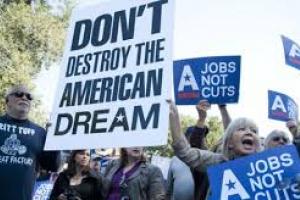
The "deficit problem" is man-made. The deficit is now down 60 percent as a percent of gross domestic product. It is down more than the deficit hawks Alan Simpson and Erskine Bowles asked for. This rapid reduction is seriously hurting the economy and jobs, but demands for cuts continue. It is time for Congress and the President to "pivot" to focusing on our real problems: the jobs gap, the wage gap and the trade gap.
Food for Peace ends up looking a lot more like Food for Profit. The letter ends with one final truth, declaring that food aid programs are "some of our most effective, lowest-cost national security tools." By handicapping local food markets across the world, food aid keeps poor countries poor and compliant, and provides US-based companies with dependable markets for the dumping of surplus food commodities.
Spread the word