Kurdish Movement Releases Statement on Turkey Coup Attempt
Kurdish Question
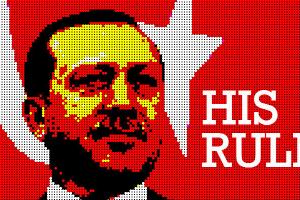
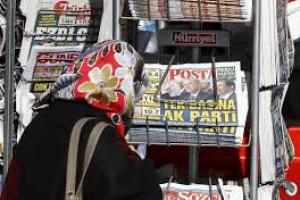
With his Justice and Development Party (AKP) controlling a sizable majority in parliament, Erdoğan has been steadily increasing his grip on power, with police raids on opposition media, the jailing of independent journalists on trumped-up charges, severe repression in Kurdish-populated areas and arrests of even moderate non-violent Kurdish leaders for alleged terrorist ties, the undermining of the independent judiciary, and the arrests of political opponents.
Turkey’s major trade unions called for a one-day strike on 29 December to protest the government-led military operations against the Kurds. Union representatives declared that they would persist in struggle against those who are trying to destroy the hope of both peoples [Turks and Kurds] to live together and build a common future.
While President Obama is certainly correct in saying that "Turkey, like every country, has a right to defend its territory and its airspace," exactly how it may do so is more complicated than the president implies. In fact, the Russians may have strong legal arguments that any such right under international law was wrongly asserted in this instance.
The finally tally is almost everything Erdogan wanted, although he fell short of his dream of a supermajority that would let him change the nature of the Turkish political system from a parliamentary government to one ruled by a powerful and centralized executive—himself. And while the AKP now has a majority, it is at the expense of re-igniting the war with the Kurds, a conflict that has cost Turkey $1.2 trillion and some 40,000 lives.
In the June 7 election, Erdogan’s AKP lost its absolute majority in the legislature. The defeat was mainly due to a breakthrough by the Kurdish-led, leftist, People’s Democratic Party (HDP) that took 13.1 percent of the vote and won 80 seats, seats that in the past usually went to the AKP. Almost before the final tallies were announced, Erdogan moved to prevent the formation of a government and force another election.
Turkish journalist Onur Erem interviews noted political commentator Tariq Ali on Turkish President Recep Tayyip Erdoğan’s Syrian policy in the aftermath of the October 10th terrorist attack which killed more than 100 peace demonstrators in Ankara. According to Ali, Erdoğan has been one of the principal supporters of the Islamic State as a new force to bring down Syrian President Assad’s regime. But Turkey and NATO’s strategy in the region is now in ruins.
Responding to the July 20 bombing in Suruç, Turkey ended its standoff with the Islamic State (Isis), and attacked Isis positions in Syria. Then, apparently with U.S. acquiescence, Turkey launched air strikes against Kurdistan Workers Party (PKK) bases in Iraq and Syria, ending a two-year ceasefire. Many believe Turkey’s targeting of Isis is only a pretext for its efforts to suppress the PKK, and the Kurdish national movements in Turkey, Iraq, and Syria.
Spread the word