What Activists Committed to the Long-Haul Fight Can Learn from the Life of Organizer Fred Ross
In These Times
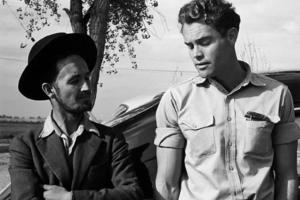
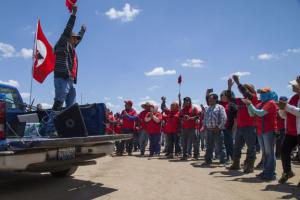
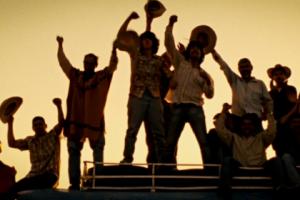
The strike and union campaign at Klein Management are part of a larger movement among indigenous Mexican farm workers, which is sweeping through the whole Pacific coast. Work stoppages by Triqui and Mixteco blueberry pickers have hit Sakuma Farms in Burlington, Washington, for the past three years. Workers there organized an independent union, Familias Unidas por la Justicia, and launched a boycott of Driscoll's, the world's largest berry distributor.
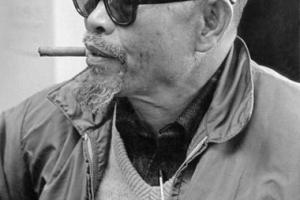
Mythology has hidden the true history of how and why the great grape strike started, especially its connection to some of the most radical movements in the country's labor history. After 50 years that silence is lifting. Dawn Mabalon, a history professor at San Francisco State University, has documented the radical career of Larry Itliong, who headed the Agricultural Workers Organizing Committee (AWOC), one of the two organizations that carried out the 1965 strike.
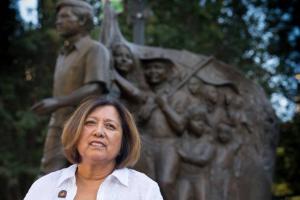
Hundreds marched to the Los Angeles City Council last October, to support a resolution supporting a farm worker union fight. Hardly anyone had heard of the company involved. Gerawan Farming, one of the country's largest growers, with 5,000 people picking grapes and peaches, is challenging the California law that makes farm workers' union rights enforceable. Lining up behind Gerawan are national anti-union think tanks. A local struggle now has much higher stakes.
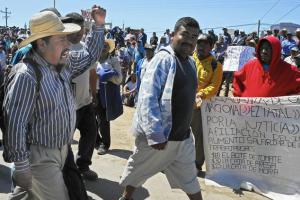
A major agricultural labor action is entering its second week in Mexico, where such walkouts are rare. But workers report that they gained experience in the US - via the Coalition of Immokalee Workers in Florida, or with the UFW on the west coast - and those lessons helped inspire workers to organize and fight for their rights in Mexico.
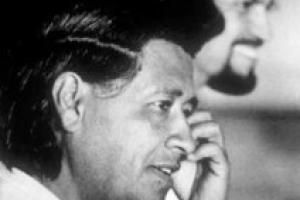
The movement led by Cesar Chavez , Dolores Huerta and others created a union and reduced the oppression of farm workers for a time. Then the corporations and the Right Wing forces adapted their strategies of oppression. The assault on the UFW and the current reconquest of power in the fields are examples of strategic racism, that is a system of racial oppression created and enforced because it benefits the over class -- in this case corporate agriculture.
The new film, Cesar Chavez: History is Made One Step at a Time, doesn't capture the diversity of the farmworkers' movement. "When I was a farmworker, before the strike, we lived in different worlds - the Latino world, the Filipino world, the African-American world and the Caucasian world," Eliseo Medina as interviewed by David Bacon for In These Times.
Spread the word