How the Recession Changed Long-Term Unemployment
The Atlantic
African-Americans are disproportionately likely to be poor, they are only a quarter of Americans living in poverty; whites make up about 41% of the poor. Those white Americans who don't want to help the poor because they'd be helping people of another race are actually screwing over white people big time. The wealth gap between /white and African-American families tripled between 1980 and 2009.
A training program is the central component of an effort by Unite Here Local 26, the hospitality workers’ union, to reach out to the African-American community to fill jobs that offer good wages and benefits. The initiative aims to expand the diversity of hotel workforces, increasingly dominated by immigrants, and meet the growing demand in the industry for employees who are fluent in English.
The lack of wage growth is one reason why many consumers feel that the broader economic recovery hasn’t reached their wallets. The problem has divided academics and fueled political debate on Capitol Hill and across the country, turning an increase in the minimum wage, for example, into a central issue in the midterm elections.
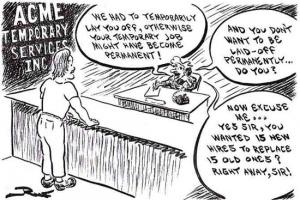
"Workers increasingly serve businesses that do not officially 'employ' the worker — a distinction that hampers organizing, erodes labor standards and dilutes accountability," said Catherine Ruckelshaus, general counsel for the National Employment Law Project, which advocates on behalf of low-wage workers. A recent Federal Reserve study showed that nearly 7.5 million people who are working part time — contract workers included — would rather have full-time jobs.
Spread the word