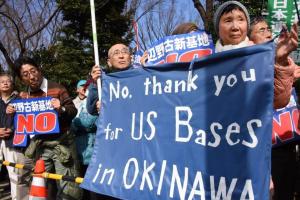
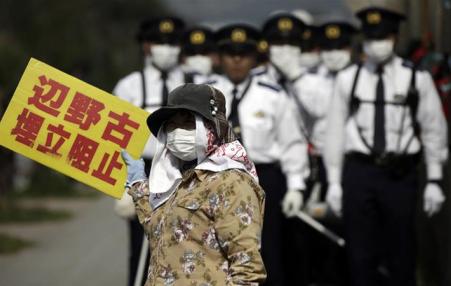
70,000 Rally in Okinawa Over US Military Base Relocation
Al Jazeera
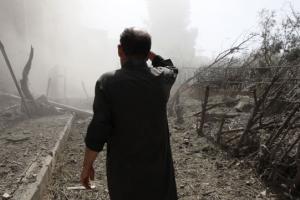
In September 2002, Amr Moussa, then head of the Arab League, offered a warning I’ve never forgotten. The Bush administration’s intention to invade Iraq and topple its ruler, Saddam Hussein, was already obvious. Were they to take such a step, Moussa insisted, it would “open the gates of hell.” His prediction turned out to be anything but hyperbole -- and those gates have never again closed.
Here is a critical discussion of Okinawa’s role in serving American and Japanese strategic interests. The interplay of overseas bases and U.S. foreign policy is a crucial dimension of the global projection of American power. This essay offers reflections on this reality, as well as the linkage between the network of foreign military bases and the emergence of the first global state in history, a new political phenomenon that distinguishes it from ‘empires' of the past.
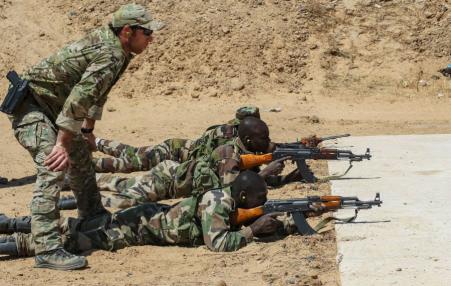
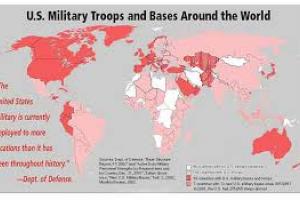
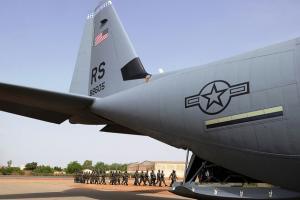
If you're like most people in the United States, you have a vague awareness that the U.S. military keeps lots of troops permanently stationed on foreign bases around the world. Have you ever really investigated to find out how many, where exactly, at what cost, to what purpose, and in terms of what relationship with the host nations?A wonderfully researched new book, six years in the works, answers these questions in a manner you'll find engaging.
The first step would be for Washington to put intense pressure on Saudi Arabia, the Arab states of the Persian Gulf, and Turkey, to halt the flow of weapons to the Syrian rebels, while simultaneously getting Russia and Iran to do the same. A concerted, worldwide diplomatic effort along those lines could work, but there’s zero evidence that President Obama has even thought of that.
Spread the word