The Unions Strike Back: Janus, West Virginia, Oklahoma, and the Future of Organized Labor
Brown Political Review
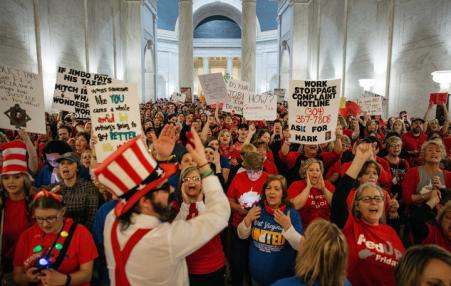
“The Catholic bishops of the United States have long and consistently supported the right of workers to organize for purposes of collective bargaining,” a U.S. Conference of Catholic Bishops says.brief says. “Because this right is substantially weakened by so-called ‘right-to-work’ laws, many bishops - in their dioceses, through their state conferences, and through their national conference - have opposed or cast doubt on such laws, and no U.S. bishop has expressed support for them.”
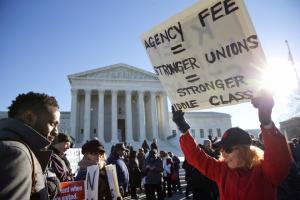
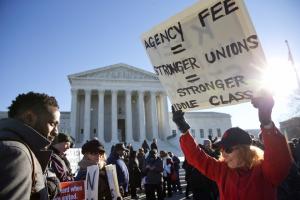
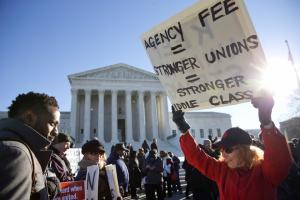
A U.S. Supreme Court ruling allowing workers to refuse to pay the fees would have been the culmination of a decades-long campaign by a group of prominent conservative foundations aimed at weakening unions that represent teachers and other public employees. Tuesday’s deadlock denied them that victory, but it set no precedent and left the door open for further challenges once the Supreme Court is back at full strength.
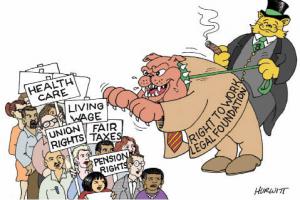
If the U.S. Supreme Court rules in favor of a lawsuit filed by the National Right to Work Legal Defense Foundation, every state in the country would essentially turn into an anti-union "right to work" state, which would be a significant blow to public sector unions' collective bargaining efforts and also complicate thousands of existing contracts between organized workers and municipalities, cities, counties, and states across the country.
Spread the word