$700 Billion For What? How Runaway Military Spending Keeps Us from Meeting Our Real Needs

Mark Haim The Indypendent
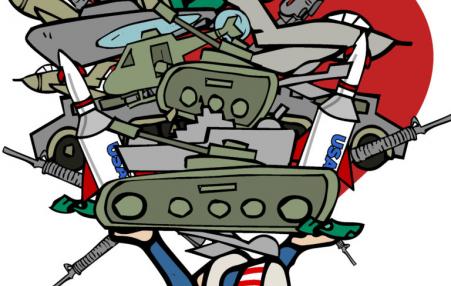
During the Cold War, the supposed threat of Communism was the justification for super-sized budgets and a continuous stream of wars and interventions-some overt, others covert or proxy-none of which had anything to do with defending the United States-and none of which ended in victory. These were sold to the American people as being fought to "defend freedom" or "support democracy." After the Cold War ended it became more difficult to justify such a massive military.


A Look at Economical and Political Conditions in Iran

Faramarz Dadvar Portside
The danger of Donald Trump resorting to military action to prop up his failing policies cannot be over-looked. National Security Advisor Michael Flynn threatened retaliation against Iran, which for those of us of a certain age sounded like the Gulf of Tonkin incident (used as justification for War in Vietnam) - later proved to be a fabrication. What really is Iran with a population of 82 million people? Here is a report on what is actually happening in Iran today.

Team Refugee and the Normalization of Mass Displacement

Phyllis Bennis and Kareem Faraj Foreign Policy in Focus
Though President Obama rejected the “Global War on Terror” label in favor of the anodyne “overseas contingency operations,” the conflict remains global, and it remains a war. No one even claims that the bombs we’re dropping over Syria are “smart.” And no one except the grieving families even try to count those they kill.

books

Book Excerpt: America's Addiction to Terrorism

Michael D. Yates, Monthly Review Press Book Excerpt Monthly Review
The following excerpt is the Foreword to America's Addiction to Terrorism. Portside is pleased to share this with our readers. In the U.S. today, the term "terrorism" conjures up images of dangerous, outside threats: religious extremists and suicide bombers in particular. Harder to see but all the more pervasive is the terrorism perpetuated by the United States, itself, whether through military force overseas or woven into the very fabric of society at home.

Poitras Exhibit at Whitney Turns U.S. Government Threat to Liberty into Political Art

Lucy Komisar The Komisar Scoop
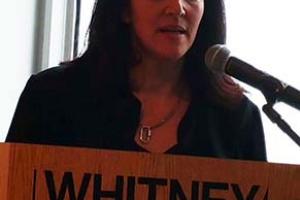
Art as politics in the powerful new exhibit at the Whitney Museum in New York by Laura Poitras. Museum director Adam Weinberg sets the show "in the tradition of socially and politically engaged artists - progressive artists such as Ben Shahn and Alice Neal." He said, "The aim of the projections is to provoke moral and ethical responses." Indeed, they do. Or they should.

Who Benefits From A Post-Paris “Clash of Civilizations”?

Tom Englehardt TomDispatch
ISIS (and al-Qaeda) is engaged in a global “danse macabre” with the U.S. and its allies. ISIS attacks, spreading death, chaos, panic, and alarm in our world at next to no cost at all. Washington and its allies respond with big-budget versions of the same, including intensified air campaigns that wreak death and havoc on civilian populations and infrastructure. Each is committed to creating a world where there are no gray zones, only a “clash of civilizations.”

Henry Kissinger and the Legacy of Air Power Diplomacy

Greg Grandin TomDispatch
While Henry Kissinger is not responsible for the evolution of the U.S. national security state into such a monstrosity, his strategies, the use of bombing as an instrument of “diplomacy” in Southeast Asia, the militarization of the Persian Gulf, and the violation of the sovereignty of neutral countries to destroy so-called enemy “sanctuaries,” has created the conditions for the endless wars started by Bush’s neocons and waged by Obama’s liberal hawks.

Fourteen Years Later, Improbable World

Tom Engelhardt TomDispatch
The 9/11 attacks and the thousands of innocents killed were an international crime of the first order. But 14 years later, no one in Washington has yet taken the slightest responsibility for blowing a hole through the Middle East, loosing mayhem across significant swathes of the planet, or helping release the forces that would create the first true terrorist state of modern history.

Understanding ISIS and the New Global War on Terror

Phyllis Bennis Institute for Policy Studies
Phyllis Bennis' new book — the latest in her Middle East primer series — is on both ISIS and the new global war on terror. Like the earlier primers on Palestine and Afghanistan, the new book is written in a Frequently Asked Questions format -- great for use as an organizing tool..
Subscribe to War on Terror