Gerrymandering in Front of the Supreme Court
Brennan Center for Justice
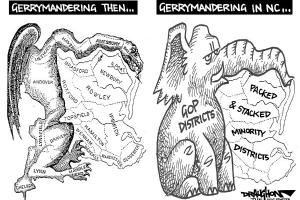
The Supreme Court heard arguments this week in a case challenging partisan gerrymandering in Wisconsin. So why not apply data science to a decades old issue?
Records make clear the Bradley Foundation no longer simply favors groups promoting its signature issues: taxpayer-funded school choice and increased work requirements for welfare recipients. It now regularly funds nonprofits that are, among other things, hostile to labor unions, skeptical of climate change or critical of the loosening of sexual mores in American culture.
This was first time in more than three decades that a federal court ruled for the plaintiffs in a partisan-gerrymandering suit after a full trial. It also dealt a critical blow to a very particular kind of gerrymander—call it “extreme seat-maximization”—that emerged in Wisconsin and a handful of other states in the most recent redistricting cycle.
“When there isn't any recourse at the political level, it has been through the general strike that we’ve been able to have our power felt,” she said. The group held its first “Dia Sin Latinos” march in Wisconsin last year, but this year’s attendance was nearly triple at around 50,000, organizers say.
Marquette University law professor Paul Secunda said he thinks the legal battle over right to work in the state will eventually be decided by the Wisconsin Supreme Court, where conservatives hold a 5-2 majority. However, Secunda said Wisconsin's right-to-work lawsuit has highlighted "a real free-rider problem" with right to work, and that future lawsuits could raise similar arguments in federal court.
Daniel DiSalvo's self proclaimed 'non-partisan' attack on public unions as greedy, inefficient and undemocratic, 'Government Against Itself,' has been welcomed by the right and granted recognition for its 'scholarship' even by some on the left. Not so fast, argues William P. Jone, in a deeper look into the economic realities and history of public unions, and the place of public unions in our democracy, DiSalvo has confused the symptom with the disease.
Spread the word