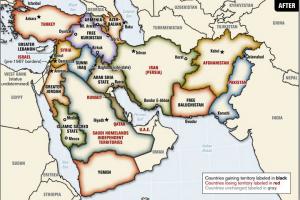
Are the U.S. and Russia Forming 5 New States in the Middle-East?
Foreign Policy in Focus
President Obama’s decision to leave actually ending, as opposed to officially “ending,” the U.S.-led war in Afghanistan to his successor (barring Congress developing the nerve and the decency to act) illustrates our collective and his personal failure to overcome what candidate Obama once called the mindset that gets us into wars.
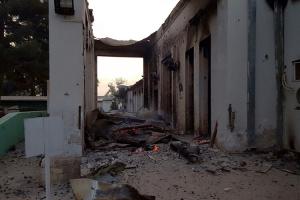
Chris Hayes talks to Jason Cone, executive director of Doctors Without Borders, about the need for an independent investigation of the hospital air strike in Afghanistan that killed 22 people.
Today we are fighting back for the respect of the Geneva Conventions. As a medical humanitarian organization, we are fighting back for the sake of our patients. We need you, as members of the public, to stand with us to insist that even wars have rules. This was not just an attack on our hospital-it was an attack on the Geneva Conventions. This cannot be tolerated. These Conventions govern the rules of war and were established to protect civilians in conflicts...
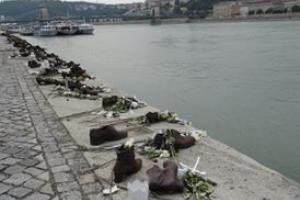
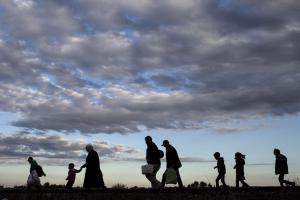
The refugee influx struck a strong emotional chord with me, as a Hungarian-American visiting my parents' homeland. I had arrived in Hungary on August 25 with my wife Debi, to visit my late Catholic mother's relatives, and retrace the stories of my Jewish father who had survived the genocide of World War II.
Washington helped create the conditions with its wars in Iraq and Afghanistan. The numbers keep on growing. The authorities are overwhelmed, as are the solidarity networks. The refugee crisis has revealed a different rift: between thousands of ordinary citizens, from Greece to Germany to Britain, ready to share their bread their homes, and governments determined to fortify their borders and protect their power, backed by both the anxious and the frankly xenophobic.
Spread the word