Tidbits - August 20, 2015 - Immigrant Dreams; Julian Bond; Bernie Sanders and #BLM; The Nuclear Bomb; Haiti; Third Reconstruction; Attack on Portside Servers; and more...
Portside
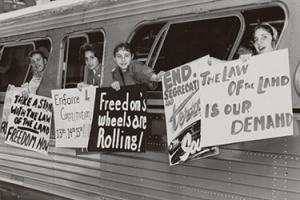
The Freedom Rides originated with a woman. Her name was Irene Morgan, and she was a 27-year-old wartime factory worker and mother of two traveling from Virginia to her home town of Baltimore on a July morning in 1944. Morgan, recovering from a miscarriage and unable to stand for any significant period of time, was sitting in the colored section of a Greyhound bus. At some point, she and her seatmate were asked to give up their seats to a white couple. She refused...
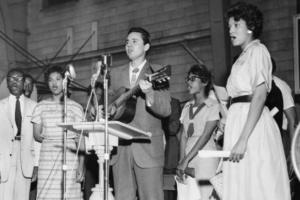
Guy Carawan's music became the unofficial anthems of the Civil Rights movement. For over 50 years, Guy was the music director of Highlander Center, an inter-racial training center for labor, civil rights, and environmental activists, located in rural Tennessee. Guy graduated in 1949 from Occidental College, where he majored in math, played on the basketball team, and was a member of ATO fraternity - an unusual background for someone who would become a civil rights icon!
Born into the segregated rural South, James Gustave ("Gus") Speth didn't see the oppression and poverty his black neighbors faced. A confrontation at a northern university with civil-rights advocates in the early 1960s triggered a life-long moral compulsion to support the burgeoning civil rights struggle. The newly minted anti-racist grew into a leading environmentalist, political activist, prolific author and Yale dean. The book under review is his memoir.
An outline for social transformation in the United States, inspired by South Africa's Freedom Charter. The Democracy Charter, summarized below, seeks to enlarge the public's understanding of the connectedness of these issues as a way to achieve a social transformation of American society. This is the ultimate purpose of our movement.
Her biographer Cate Fosl has wisely said about Anne, "Hers has been among the most forceful and persistent of white voices for racial equality in modern U.S. history." Fosl's "Subversive Southerner: Anne Braden and The Struggle for Racial Justice in the Cold War South" is an invaluable history of our Southern civil rights movement.
When we were founded as a nation, a fierce political battle erupted over who would have the vote. It was a fight over who was included in "We the People." We have been fighting that political war ever since, and continue to fight it to this day. The issue of who has the vote continues to be a fight because those who are well-served by the status-quo want to limit the voting power of those who they fear have good reason to be dissatisfied with the way things are.
Spread the word