Homo Naledi: A New Human-like Species, Discovered in South Africa
BBC
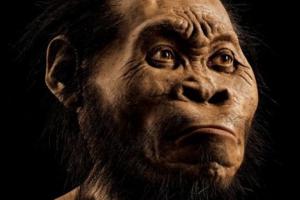
Homo naledi adds a new human relative that was primitive but shared physical characteristics with modern humans. The location of the fossil bones suggests that they were deliberately disposed of underground.
August 26 is World Dog Day, a good time to reflect on the very reasonable possibility that dogs enabled modern humans to outcompete Neanderthals, and also on the fact that dogs are smarter, more empathetic and more devious than you knew. These days, both ordinary dogs and their ordinary humans can participate in Citizen Science, advancing our understanding of this oldest human coevolution.
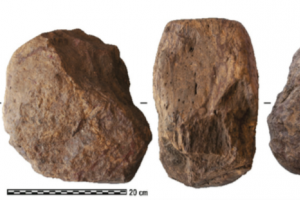
Stone tools unearthed at a site in Kenya predate any identified human ancestors -- previously thought to be the first makers of stone tools -- by hundreds of thousands of years. These finds "will force us [to rethink] what makes us humans ... Increasing knowledge of our remote past is casting doubts on previous certainties and is showing that the process of becoming what we are now is far more gradual than what we previously thought."
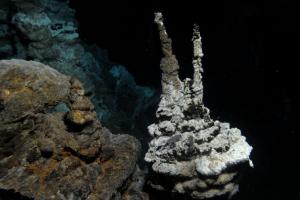
Scientists estimate that the first eukaryotes evolved about 2 billion years ago, in one of the greatest transitions in the history of life. But there is little evidence of this momentous event, no missing link that helps researchers trace the evolution of life from simple microbes to eukaryotes. On Wednesday, a team of scientists announced the discovery of just such a transitional form.
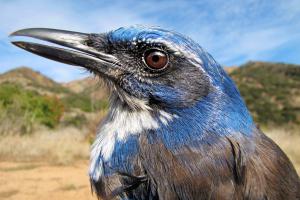
Being on the way to becoming a new species isn’t the same thing as actually speciating. Actual speciation without isolation is quite rare, and even the Santa Cruz Island jays have not actually speciated, and may never even do so. But the implications for long-held evolutionary principles are intriguing. Darwin’s famous Galapagos finches certainly prove that isolation leads to speciation, but now it may be that isolation isn’t always necessary to get species to diverge.
Neanderthals divided some of their tasks according to their sex. A new study analyzed 99 teeth of 19 individuals from three different sites (El Sidron, in Asturias - Spain, L'Hortus in France, and Spy in Belgium), reveals that the dental grooves in the female fossils follow the same pattern, different to that found in male individuals.
Spread the word