Wall Street Bonuses and the Minimum Wage
Institute for Policy Studies
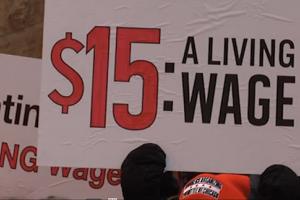
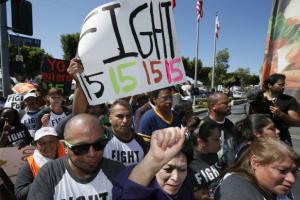
The results were overwhelming. With 100 of the 103 precincts where the issue was on the ballot reporting, 87 percent of voters were backing the $15-an-hour wage. Just 13 percent voted against the advisory referendum. That huge level of support will strengthen the hand of activists who are encouraging the city council to consider a major wage hike.
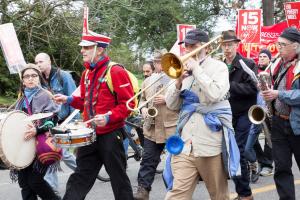
New Mayor Ed Murray says, “We know it is not a matter of if we get to $15 per hour, but when and how we get there.” All nine city council members publicly endorse the concept. But underneath the apparent consensus are differences on what $15 means and how long it should take. So labor and community groups in Seattle are mobilizing to hold the council’s feet to the fire—and to get the job done by ballot initiative if the council compromises too far.
A decision in favour of Pamela Harris in the Harris v. Quinn case before the U.S. Supreme Court would seriously impact the quality of care provided to tens of thousands of seniors and people with disabilities who use state-supported home care services.
It would do this by ruling the collective agreement covering more than 27,000 workers unconstitutional. More broadly, a ruling that the current system is unconstitutional threatens the future of collective bargaining.
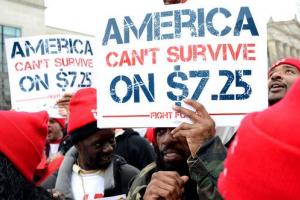
A Los Angeles City Council committee voted unanimously to authorize a study on nearly doubling the minimum wage for employees of large hotels in the nation's second-largest city. The L.A. proposal is one of several municipal moves toward raising wages well above the 5-year-old federal rate of $7.25; at $15.37, it would set a local hotel industry wage floor far beyond the $10.10 proposed by congressional Democrats.
Spread the word