A Manual for a New Era of Direct Action
Waging Nonviolence

The AFL-CIO is discussing “the next stage” in alternate formations and there “will be some limited, thoughtful experiments in different places through various affiliates.” The AFL-CIO also plans to support an ambitious multi-union effort to organize in Texas. “The AFT has come to us and said, ‘We want you to convene other unions to make a long-term investment in Texas and we’re going to do it.”
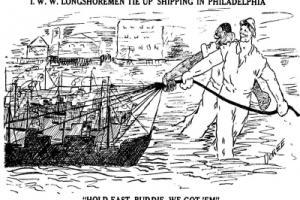
With the traditional union model and its emphasis on bargaining by representatives exiting the stage, working people are urgently searching for a new way to challenge corporate power and win a better life for their families. One hundred years later, the road not taken—represented by Local 8—represents one model.
Unions have looked to the US for ideas about how to fight back. They adopted "The Organizing Model," an approach to organizing first developed by the AFL-CIO in the 1980s that is now a core principle in virtually every major labor organization in the US, Europe, Australia, and parts of Asia. While the shift to an "organizing" orientation is more than necessary, it is also less than sufficient to revive the labor movement and it's shortcomings have also become apparent.
There are those who suggest that the current union movement cannot sustain itself and that out of its ashes will arise something new and better. Such views are at best wishful thinking and at worst irresponsible . . . Unions, as they are currently constituted, organized and theorized, are not up to the challenges of the 21st century. The existing union movement, however, can play a role in the building of that new labor movement for the not-so-new 21st century.
Spread the word