
The outlines of President Trump’s endgame in the Iran war are now emerging. In a phone call with Israeli Prime Minister Benjamin Netanyahu yesterday, Trump reportedly explained that the United States was negotiating a “letter of intent” with Iran that would “formally end the war and launch a 30-day period of negotiations” on Iran’s nuclear program and the reopening of the Strait of Hormuz. The purpose and effect of such an agreement should be clear: The United States is walking away from the crisis. Trump may launch another limited strike to look tough and satisfy the demands of the war’s supporters, but it would be a performative gesture. Endgame in this case is a euphemism for “surrender.”
Trump has blinked many times in the confrontation with Iran—ever since March 18, when Israel attacked the Pars gas field and Iran retaliated with a strike against Qatar’s most important natural-gas-production facility. Trump then called for a halt on U.S. and Israeli targeting of Iran’s energy infrastructure, and the war effectively ended.
Trump’s repeated threats to resume attacks since then have proved to be bluffs. The leaders in Tehran have been calculating for two months that Trump would not launch another attack, and for this reason they have made no concessions despite the damage they suffered from 37 days of relentless strikes. On the contrary, their terms for a settlement are those of a victor: They demand war reparations, no limits on uranium enrichment, recognized control of the strait, and an end to sanctions.
For Trump to respond to this defiance by now calling for another 30 days of cease-fire and talks is a tacit admission of defeat. If he does launch a performative attack in the next few days, the Iranians will understand it for what it is. No one believes that he is going to resume a full-scale war a month from now. Among other reasons, with 30 more days to heal, rearm, and fill its coffers with tolls, Iran will be a more formidable adversary.
In 30 days, moreover, the new Iranian strait regime may already be firmly in place. As the Institute for the Study of War reports, Iran has been using the cease-fire period to “normalize” its control over the strait by “compelling oil-importing countries” to establish transit agreements with Tehran and charging fees on vessels from nations without such deals. According to Iranian officials, the new strait regime will give Iran’s strategic partners, such as Russia and China, priority and allow nations friendly to Iran, such as India and Pakistan, to negotiate their own transit agreements. Vessels associated with nations that Iran regards as an adversary will be denied access to the strait entirely.
Several nations, including South Korea, Turkey, and Iraq, are reportedly already negotiating at least temporary transit agreements. Now that Trump has made clear he has no intention of fighting to reopen the strait, the stampede to get good terms with Tehran will begin. All nations heavily dependent on energy from the Persian Gulf will want to cut their deal quickly to get the oil and gas and other commodities flowing and rescue their battered economy. Those nations currently allied with the United States and friendly to Israel will feel pressure to distance themselves and make their peace with Iran. The international sanctions against Iran will collapse, and even more money will pour into the country’s accounts as its newly central role in the global economy becomes normalized. By the end of 30 days, most of the world will have a stake in the new arrangement and will oppose any resumption of hostilities, even in the unlikely event that Trump wanted to go back to war.
Trump no doubt hopes that he can slip away without Americans noticing the magnitude of this defeat. The financial markets may stabilize if it is clear that oil will eventually start flowing again through a reopened strait, even if under the new Iran-controlled system. A major strategic setback for the United States need not affect Wall Street. The president may also hope that he can change the subject by launching another military operation, this time against the government in Cuba. And the news media have indeed begun writing more about Cuba than about the unfolding disaster in Iran.
According to one U.S. official, Netanyahu’s “hair was on fire” after the call with Trump—for good reason. The Iran war may end up as the single most devastating blow to Israel’s security in its brief history. On the present trajectory, Iran will emerge from the conflict many times stronger and more influential than it was before the war. It will exercise leverage with dozens of the richest nations in the world, all of which will have an acute interest in keeping Iran happy. They will be unlikely to take Israel’s side in any conflict that it has with Tehran or with its proxies in Lebanon and Gaza, because Iran will have the means to punish them if they do. Israel will emerge more isolated than it has been at any time in its history—and not least from its only reliable protector, the United States. When Trump turns his back on Israel, as he must do to implement this policy, MAGA will gladly follow. The bipartisan anti-Israel consensus in the United States will grow and harden.
Will Israel go gentle into this good night? That is the wild card that may disrupt the financial markets’ dreams of a new stability in the Gulf. A stronger, richer, more influential Iran will mean new life for Hamas and Hezbollah. It will mean the end of the Abraham Accords, as the Gulf States will have to make their own peace with Tehran so that their economies can survive. Trump says that Netanyahu “will do whatever I want him to do.” But can Israel stand by while Iran replaces the United States as the arbiter of power in the region?
Most likely, the new normal in the Persian Gulf will be chronic instability and frequent disruptions in shipping. That’s what happens when the hegemon cedes hegemony.
Portside moderator: Related Article --
Analysis Will Trump Forgive Netanyahu Over Iran? The Emerging Deal Suggests Not
As Washington weighs a Pakistan-brokered cease-fire and renewed nuclear talks, Israeli officials fear Trump is sidelining Netanyahu after a war that lasted longer – and cost more politically and economically – than the White House expected
Amos Harel Haaretz May 24, 2026
It's not over until it's over, but signs began to mount Saturday evening suggesting concrete progress in the indirect talks between the United States and Iran.
A few hours after U.S. Secretary of State Marco Rubio reported "slight progress" in the negotiations, administration sources added more details. United States President Donald Trump is holding consultations on a new compromise.
On the table, mediated by Pakistan, is a proposal for an immediate end to the war and the reopening of the Strait of Hormuz, followed by a 30-day period during which the parties would conduct talks on a broader agreement, including addressing the issue of Iran's nuclear program.
The war in the Persian Gulf has already dragged on far longer than Trump and his people had initially anticipated. The resultant political and economic damage in the United States is only increasing. From Israel's perspective, if there is anything positive about the recent declarations by the president and senior Trump administration officials, it is their repeated insistence that the U.S. will never allow Iran to produce nuclear weapons.
Nevertheless, political sources in Israel were quoted Saturday evening as expressing concern about the emerging agreement. Some of the reservations have to do with fears that Trump will compromise too much on the main question that still occupies him: the restrictions on Iran's nuclear program (It has been clear for some time that the Americans are not particularly moved by Israeli demands to limit Tehran's ballistic missiles and its assistance to proxies throughout the Middle East).
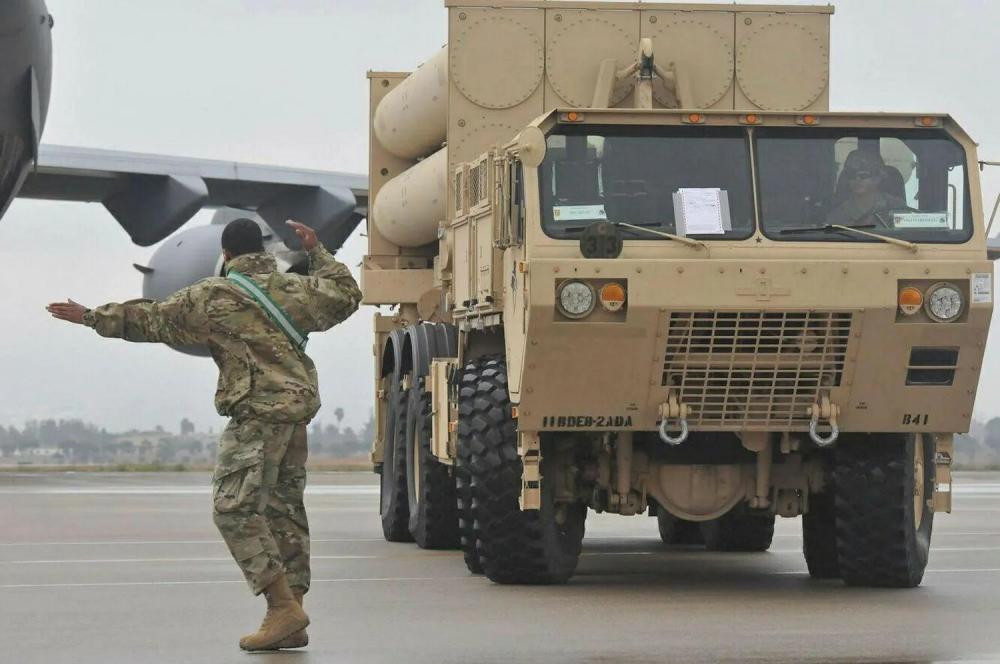
A battery of the Americans' THAAD missile defense system lands in Israel, March. Credit: U.S. Army Europe/IDF Spokesperson's Unit
But there is a more profound issue here: Israeli Prime Minister Benjamin Netanyahu has consistently urged Trump to return to full-on war, arguing that the collapse of the Iranian regime is inevitable if sufficient military and economic pressure is brought to bear. Netanyahu speaks of a joint U.S. and Israeli attack, like the one that started the war on February 28. The massive movement of U.S. refueling and fighter jets to Israel in the past few days indicates that both countries' militaries are still preparing for such a scenario.
The relationship between Trump and Netanyahu no longer appears as close as it once was. The president said Wednesday that the prime minister would "do whatever I want him to do" on Iran. That came against the backdrop of their most recent meeting, on February 11, when Netanyahu went to the White House and persuaded Trump that a joint attack on Iran, together with the assistance of Kurdish militias, was likely to bring down the regime in Tehran.
Several U.S. media reports last week suggest that Trump hasn't forgotten and might not forgive. It's apparent that most of the reports come from the vicinity of the administration. They include reports of a brief, tense phone call between Trump and Netanyahu on Tuesday; of a serious shortage of American THAAD interceptor missiles, because the United States used hundreds of them to protect Israel from Iranian missiles; of a U.S. decision to exclude Israel from the talks with Iran and to limit its influence and of an Israeli plan to install former Iranian President Mahmoud Ahmadinejad as the new leader, instead of Ayatollah Ali and his son Mojtaba Khamenei (Apparently someone in Washington decided that Ahmadinejad was already no longer of use. It's possible that the leak will seal his fate.)
What all these reports share is the impression of diminishing Israeli influence over Trump's considerations. They might be forgotten if it's decided to again attack Iran together, but one shouldn't ignore the long-term implications. Support for Israel in both main political parties has hit a new low. No less serious is the fact that negotiations over Israel's next military aid package from the United States will begin against the backdrop of considerable reservations from Trump all the way down over keeping the aid at current levels (During Barack Obama's presidential terms, it was agreed that annual assistance would remain at $3.8 billion for a decade. That agreement will expire in two years.)
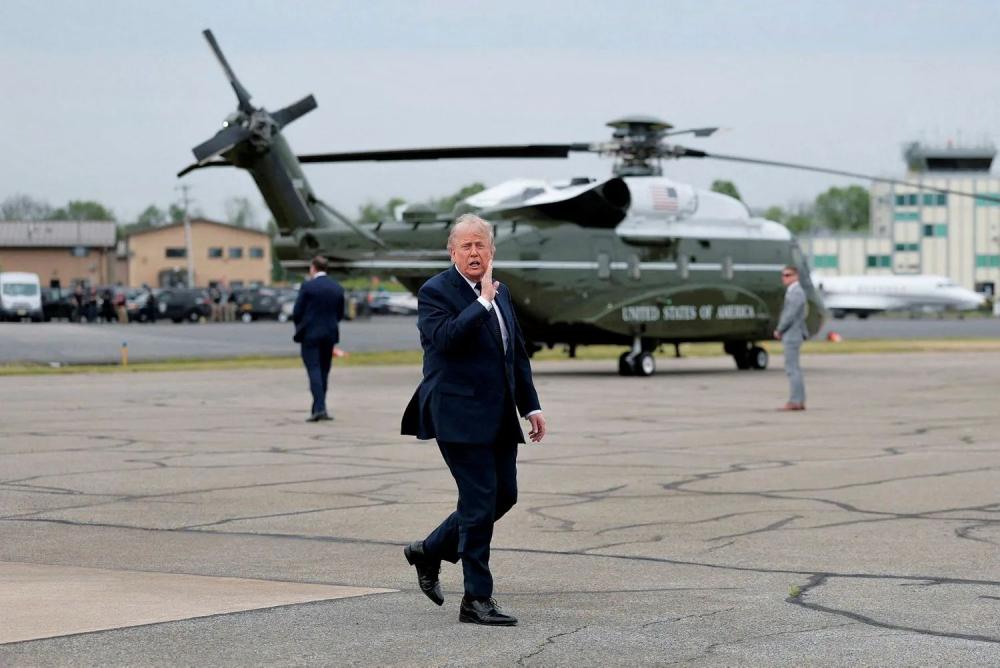
U.S. President Donald Trump leaves Marine One to board Air Force One en route to Joint Base Andrews, Maryland, as he departs New Jersey, U.S., Friday. Credit: Kylie Cooper/REUTERS
Here's what Robert Kagan wrote in the May 21 issue of The Atlantic magazine. Kagan, who is concerned that Trump is looking to end the war and evade the conflict, thinks the president might order a limited strike on Iran "to look tough and satisfy the demands of war's supporters," but Kagan views it as an empty gesture that would be followed by the end. " Iranians will understand it for what it is," he claims.
Where does such a scenario leave Israel? "The Iran war may end up as the single most devastating blow to Israel's security in its brief history," Kagan writes. If the current trajectory continues, Iran will emerge much stronger from the confrontation than it entered it and with greater regional influence, thanks to the threatening steps that it took in the Strait of Hormuz. Other countries will be afraid to confront the Iranians and Israel will find itself more isolated than ever.
That's a particularly bleak forecast and there's no certainty that it will come to pass, but in contrast to Trump's and Netanyahu's public statements, at the moment things clearly don't seem to be moving forward in Israel's favor.
Amos Harel, the recipient of the 2015 Sokolov prize for print journalism, is Haaretz's military analyst. Harel (b.1968) was Haaretz's military correspondent from 1997-2007, and was a news editor and head of the news desk in the five years prior.
Harel is the author of three books, two of them co-written with Avi Issacharoff: "The Seventh War" (2004), about the second intifada, and "Spider Webs" (2008), about the second Lebanon war. Both books were bestsellers. "The Seventh War" won the Tshetshik Prize for Strategic Studies on Israel's Security in 2005, and "Spider Webs" got the same award in 2009.
Harel has a B.LL (Bachelor of Laws) from Tel Aviv University. He is married and has three children.
Founded in 1919, Haaretz is Israel's oldest daily newspaper and one of its most influential media outlets. Known for its commitment to high-quality journalism, Haaretz has built a reputation for in-depth reporting, insightful analysis, and a liberal and progressive editorial stance on domestic issues and international affairs.
Our commitment to staunchly independent journalism has made us an essential source for those seeking a deeper understanding of the complexities of Israeli society, the Jewish world, the Palestinian territories and the broader Middle East.
In 1997, we launched an English-language edition to cater to growing international interest in Israel and the region.
Haaretz in English provides translations of the original Hebrew content as well as exclusive articles and analyses tailored specifically for our international audience.
Today, Haaretz.com is one of the most widely read platforms for Israel-related news and analyses, attracting millions of readers from around the world, including academics, policymakers, diplomats, and journalists.
Subscribe to Haaretz newsletters
Robert Kagan is a contributing writer for The Atlantic, a senior fellow at the Brookings Institution, and the author, most recently, of Rebellion: How Antiliberalism Is Tearing America Apart—Again.
When the founders of The Atlantic gathered in Boston in the spring of 1857, they wanted to create a magazine that would be indispensable for the kind of reader who was deeply engaged with the most consequential issues of the day. The men and women who created this magazine had an overarching, prophetic vision—they were fierce opponents of slavery—but they were also moved to overcome what they saw as the limits of partisanship, believing that the free exchange of ideas across ideological lines was crucial to the great American experiment. Their goal was to publish the most urgent essays, the most vital literature; they wanted to pursue truth and disrupt consensus without regard for party or clique.
Here is the mission statement published in the very first issue of The Atlantic, in November 1857, and signed by many of the greats of American letters, including Ralph Waldo Emerson, Herman Melville, Harriet Beecher Stowe, and Nathaniel Hawthorne:
First: In Literature, to leave no province unrepresented, so that while each number will contain articles of an abstract and permanent value, it will also be found that the healthy appetite of the mind for entertainment in its various forms of Narrative, Wit, and Humor, will not go uncared for. The publishers wish to say, also, that while native writers will receive the most solid encouragement, and will be mainly relied on to fill the pages of The Atlantic, they will not hesitate to draw from the foreign sources at their command, as occasion may require, relying rather on the competency of an author to treat a particular subject, than on any other claim whatever. In this way they hope to make their Periodical welcome wherever the English tongue is spoken or read.
Second: In the term Art they intend to include the whole domain of aesthetics, and hope gradually to make this critical department a true and fearless representative of Art, in all its various branches, without any regard to prejudice, whether personal or national, or to private considerations of what kind soever.
Third: In Politics, The Atlantic will be the organ of no party or clique, but will honestly endeavor to be the exponent of what its conductors believe to be the American idea. It will deal frankly with persons and with parties, endeavoring always to keep in view that moral element which transcends all persons and parties, and which alone makes the basis of a true and lasting national prosperity. It will not rank itself with any sect of anties, but with that body of men which is in favor of Freedom, National Progress, and Honor, whether public or private.
In studying this original mission statement, we came to understand that its themes are timeless. The core principles of the founders are core principles for us: reason should always guide opinion; ideas have consequences, sometimes world-historical consequences; the knowledge we have about the world is partial and provisional, and subject to analysis, scrutiny, and revision.
Spread the word