This book shows how California recovered from the grim, racist 1990s by creating community and labor political coalitions that revitalized the state and put it on a problem-solving oriented, progressive path.
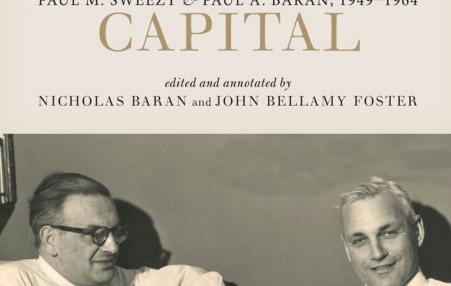
Two Marxists associated with the left journal Monthly Review correspond in the years leading up to the publication of their magisterial Monopoly Capital. The reviewer calls the collection "fascinating for its details and quiet wisdom," grappling with a reconfigured empire that persists today.
Those who contended that Roseanne shouldn't have been fired for her views, would not have backed Colin Kaepernick's right to free expression or any of his NFL colleagues', who are threatened with a ban for kneeling during the national anthem in protest against racism.
editors, Harvard T. H. Chan Newsletter
Harvard T. H. Chan School of Public Health
Chia seeds have been cultivated as a food source as early as 3500 BC; they come from the plant Salvia hispanica L., and were at one time a major food crop in Mexico and Guatemala. They may contribute to disease prevention as part of a varied plant-rich diet and other healthy lifestyle behaviors.
Workers at Burgerville voted to form a federally recognized union — the first in more than 40 years among fast-food employees nationwide. Now the Wobblies dream of organizing the entire Burgerville chain.
As the moguls of the National Football League coerce the athletes to abandon their protests against racism, Kathy Engel’s poem reminds us of the larger stakes for us all.
An Irish-Canadian-Luxembourgish co-production, adapted from Deborah Ellis’s much-loved YA novel, it’s a tale of youthful fortitude in Taliban-era Afghanistan that has something of the defiant feminist spirit of the French-Iranian gem Persepolis.
Search engines aren't the innocent, objective tools they pretend to be. Instead, as author Safiya Umoja Noble argues: “They include decision-making protocols that favor corporate elites and the powerful, and they are implicated in global economic and social inequality.”
Situated in modern India, an Indian writer reflects on the still extant disparate roles of masters and slaves as parts of a vestigial system of imperial and racial capitalism, where to be a master was alleged to be a total provider, and to be a servant was not a job but a total identity.
Spread the word