The Story of the Book That Explained the World
Chicago Tribune
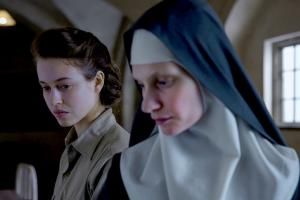
Much of Anne Fontaine’s blistering film “The Innocents” is set within the walls of a Polish convent in December 1945, just after the end of World War II. What at first appears to be an austere, holy retreat from surrounding horrors is revealed to be a savagely violated sanctuary awash in fear, trauma and shame. The snow-covered, forested landscape of the convent is photographed to suggest an ominous frontier that offers no refuge from marauding outsiders.
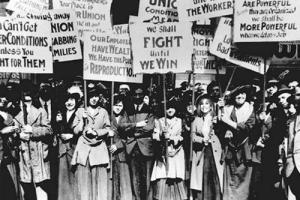
While a sharp contribution to discussions of women's oppression and liberation, the book under review is faulted for not demonstrating the actual radical connection between class and other forms of oppression. While rejecting a tendency to reduce Marxism to a one-dimensional critique of class, the book's author is faulted for downplaying the limits of intersectionality as not articulating--but instead fudging--the existing gulf between identity politics and Marxism.
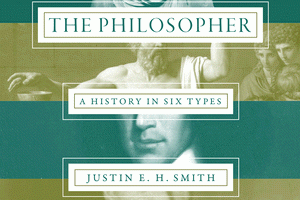
The "great majority of people deemed philosophers in history," writes Justin E. H. Smith in this new book, "have not had PhDs, have not belonged to a professional philosophical organization, and have not carried out their careers in ‘departments.’” Smith teases out the significance of that observation, as he seeks to help us rethink what philosophy is and what it means to "philosophize." Robert Minto assesses Smith's effort.
In essence, Wilderpeople is about an urban Maori (the indigenous people of NZ) juvenile delinquent type, Ricky Baker (the droll, roly-poly Julian Dennison), who is placed in a foster home somewhere out in the bush. There, he is begrudgingly adopted by “Uncle” Hec, a Caucasian ex-con and “bush man” played by the great Sam Neill.
There are genetic differences in our ability to taste food. It has been known for many years that some people are extremely sensitive to the taste of bitter substances, while others perceive little or no bitter taste. The former were called super-tasters and the latter non-tasters. In the middle was everyone else.
Spread the word