Republicans Freak Out Over Trump’s Choice for Labor Secretary
The New York Times

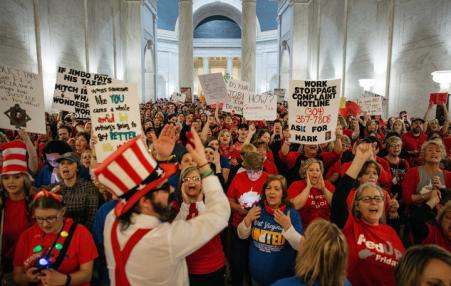
Under a new anti-union law, public-sector unions must re-certify each time they’re scheduled to bargain new contracts, every two or three years. Right-wing backers of the law hoped it would weaken unions by forcing them to devote time and resources to the recertification process and lead workers to drop their membership. But the members of the state's 468 union locals voted overwhelmingly to stick with their union.
Wisconsin was the first state to grant public-sector unions the right to negotiate contracts. Before Gov. Gaylord Nelson signed that law in 1959, only unionized workers in private companies had a government-protected right to bargain collectively. The Wisconsin idea soon spread around the country. Act 10 is an about-face, and Gov. Walker and his Republican supporters see it as a tough-minded strategy that other states can follow. History repeating itself, if in reverse.
"Union struggles reflect on all jobs," said Jane Smith, 30, a data scientist from San Francisco. "Unions won the struggle for a 40-hour workweek, and we are all benefiting from that still. Unions also fight for higher wages, which translate to higher wages for all Americans." The BART strike is a symptom of "the income and wealth inequality that is plaguing our nation," she said. "I can't believe that people are missing the point."
Spread the word