Walter Rodney and the Racial Underpinnings of Global Inequality

Tianna Paschel Items
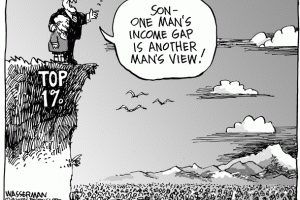
While inequality has become a topic of increased popularity and politicization in recent years, most of the attention has focused on how 1% own an increasingly large share of the world’s wealth, rather than on inequalities between nations. In a global context in which national borders and citizenship pose few barriers to the mobility of capital, the reality is also a story of the world’s richest nations continuing to reap a disproportionate amount of the globe’s profits.

The Making of a Black President

Ta-Nehisi Coates, Jackie Lay The Atlantic
Ta-Nehisi Coates explores President Barack Obama’s journey to the White House

Daryl Davis, Race & America | Movie Trailer

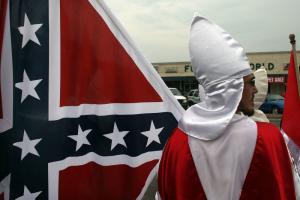
The festival trailer for the award-winning documentary feature about Daryl Davis, a black musician who befriends members of the KKK and other white supremacists in search of the answer to his question: "How can you hate me if you don't even know me."

Capitalism, Democracy, and Du Bois’s Two Proletariats

J. Phillip Thompson Items
What could emerge from an understanding of the struggle between the two proletariats and its connection to US democracy and institutions is a more powerful and forward-looking narrative of class and race than either a utopian universalist liberalism or a narrow-minded working class incapable of advancing democracy.

The System IS Rigged!—The Electoral College and the 2016 Election

Bob Wing, Bill Fletcher Jr. Common Dreams
The pro-Republican bias of the Electoral College derives from two main dynamics: it overweights the impact of mostly conservative voters in small population states and it negates entirely the mostly progressive votes of nearly half of African American voters, more than half of Native American voters and a major swath of Latino voters.

Black-White Earnings Gap Returns to 1950 Levels

Patrick Bayer and Kerwin Kofi Charles Science Blog
More and more working-age men in the United States aren’t working at all. The number of nonworking white men grew from about 8 percent in 1960 to 17 percent in 2014. The numbers look still worse among black men: In 1960, 19 percent of black men were not working; in 2014, that number had grown to 35 percent of black men. That includes men who are incarcerated as well those who can’t find jobs.

T.I. | Warzone

Three infamous incidents of violence reenacted with the racial roles reversed. 

Subscribe to Racism