Scientists Plan March on D.C.
Daily Kos
 Scientists begin going rogue, create alt Twitter account and plan march on D.C.
 Scientists begin going rogue, create alt Twitter account and plan march on D.C.
 What our communities need so intensely right now are real examples of a vision for a new culture and society, right in their own neighborhoods. They need to be able to touch and feel and experience them and also experience building them as participants in our democracy.
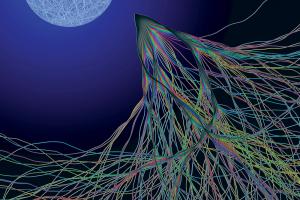 Regarding the future of quantum mechanics, I have to echo Viola in Twelfth Night: “O time, thou must untangle this, not I.”
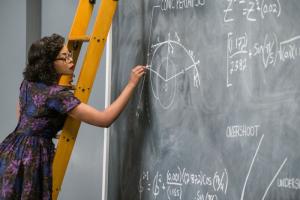 A must-see film about using math to overcome adversity and send humans into orbit
 In theory, mathematics is neutral – two plus two equals four regardless of what anyone wishes the answer was. But in practice, mathematical algorithms can be formulated and tweaked based on powerful interests.
 The Nixonian Ways Of Donald Trump. A Better Man | Keb' Mo'. Neighborhood Atheism. The No Cloning Theorem. You're a Mean One Mr. Grinch.
Is cloning possible? Not cloning as in Dolly the sheep, but cloning as in a Star Trek transporter? Here is the real science of it.
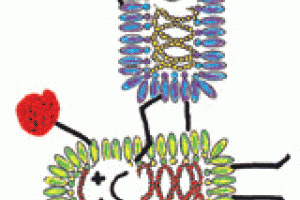 With advances in genome sequencing and computational tools to analyze genomic information, researchers are able to estimate that about 8 percent of the human genome is made of sequences that originated as invasive retroviruses. To put that number in perspective, genes make up about 1 percent to 1.5 percent of your genome.
 A Two Minute Guide to Swamp Creatures. Patti Smith | A Hard Rain's A-Gonna Fall. Merry Christmas Never Left the White House. Top Science Breakthroughs of 2016. The US Nuclear Arsenal Is a Gigantic Accident Waiting to Happen.
 New mothers show evidence of neural remodeling up to two years after giving birth
Spread the word