Laid-Off Sierra Club Staffers: ‘We Can’t Give Up on United Fronts’
Convergence
Leaders in both the environmental and labor movements say the country could prevent more public health disasters like the toxic water crisis in Flint, Michigan, if old infrastructure is fixed or replaced -- like leaky drinking water pipes, and natural gas pipelines. And at the same time, the repairs would create jobs.
“We are a small part of the 150 million Americans who work for a living,” AFL-CIO President Richard Trumka said in his keynote address Monday at the labor federation's convention in Los Angeles. “We cannot win economic justice only for ourselves, for union members alone. It would not be right and it’s not possible. All working people will rise together, or we will keep falling together.”
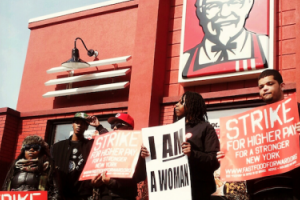
Out of sheer existential necessity, then, unions have entered a period of experimentation. The fast-food campaigns that SEIU is backing won’t plausibly conclude with a contract with McDonald’s and Wendy’s. The more likely scenario is that those protesting will try to win minimum-wage increases for workers—either generally or in particular industries—at the city level, either through the vote of city councils or of voters at the polls.
Faced with the very real threat of extinction, unions have largely put collective bargaining on the back burner, and instead must try to remind American workers of the basic concept of worker solidarity. “We start from the point of view that, because so few people are in unions these days, very few people have personal experience with collective power,” explains Karen Nussbaum, the executive director of Working America.
Spread the word