ANC Now Needs to Listen to the People: Trade Union Congress
teleSUR
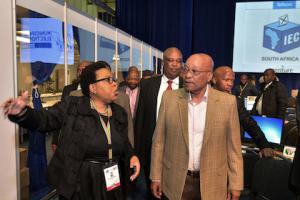
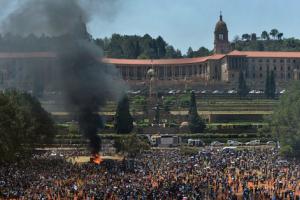
South Africa’s ruling African National Congress party conceded defeat in Nelson Mandela Bay and could lose political control of Johannesburg and Pretoria in the greatest electoral defeat for the ANC since the fall of apartheid. Widespread unemployment and poverty, rampant corruption, and political infighting were deemed the main contributors to the ANC’s political setback, particularly in the urban centers. Never before had the ANC received less than 60% of the vote.
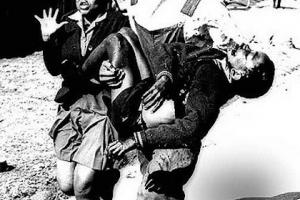
On June 16, 1976, thousands of school children in Soweto, Johannesburg, took to the streets to protest the apartheid government’s decision to educate them in Afrikaans. The police used teargas and then gunfire and the apartheid system was shaken irrevocably. While the South African Police Service is now very different from its apartheid predecessor, far too many similarities remain. One cannot reform a police service without reforming the context in which it operates.
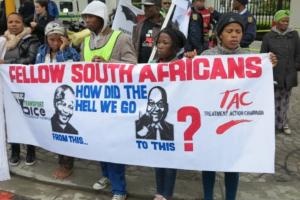
South African President Jacob Zuma’s apology April 4th has done little to resolve the political crisis wracking South Africa. The March 31st Constitutional Court ruling he used his position for personal gain and “failed to uphold, defend and respect the Constitution,” came on the heels of allegations by respected members of the African National Congress that an influential business family allied with Zuma had offered them cabinet posts in return for political favors.
It is no exaggeration to suggest that the legitimacy not only of President Jacob Zuma and the ANC, but also the notion of the liberation struggle itself is in shreds. For some of us, it was unthinkable that such an alliance of forces could degenerate into a moneymaking, lawless and violent operation represented by people who were prepared to trample on the values that we understood the movement to embody. Certainly, this did not happen overnight.
Rich countries make money by owning things – physical and intellectual property – and setting global standards the rest of the world must adhere to. This also means an economic shift within these countries, away from well-paid, secure, skilled jobs in industry to a precarious, service-based economy.
In a speech challenging both national and global inequality, with a particular focus on France and South Africa, economist Thomas Piketty concluded with calls for taxes on wealth, and a public global registry of financial assets to make that possible. The speech evoked a frenzy of comment - from praise to denunciations of Piketty's analysis as Marxist or alternately, unrealistic, to those who criticized him for having a flawed analysis that disregarded Marxist insights.
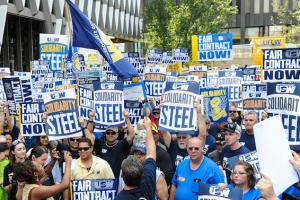
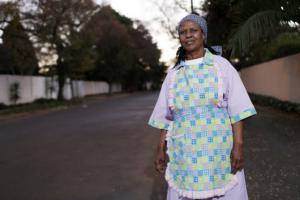
The conditions of employment for domestic workers vary from house to house, but along with miners, domestic workers have long endured one of the most exploitative employment relationships in South Africa’s history. Although a new minimum wage is more than domestic workers have ever earned, it is still not enough -- what is needed is a living wage.
Spread the word