Lessons From the Republic Windows Workers’ Sit-In, Eight Years On
Chicago Reporter
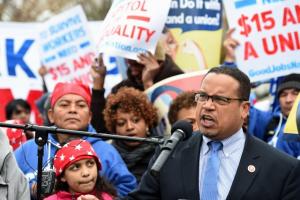
In the face of Trump and the GOP’s likely nationwide attack on unions, labor leaders are scrambling to ensure that they have a hand in reshaping a Democratic Party that has, as union power has diminished, sometimes pushed organized labor to the margins. Union members make up about 100 of the roughly 447 voting members of the Democratic National Committee, making union support a major factor in the race for DNC chair.
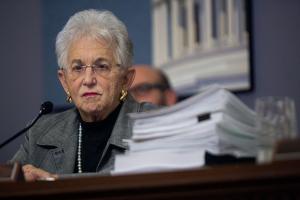
At the top of Representative Virginia Foxx's agenda is the U.S. Labor Department rule that would extend mandatory overtime pay to more than 4 million workers. A federal judge in Texas blocked the rule last month before it took effect, but the Labor Department has challenged that ruling in a federal appeals court.
With the election of Donald Trump, labor faces a unique opportunity. It will face hostility in all branches of the federal government, and will have to maintain a multi-pronged fight. Yes, union density numbers are at historically low levels, and the bulwark of public-sector unionism may suffer a major blow at the Supreme Court through a case challenging the constitutionality of fair-share fees in the public sector...It has the existential imperative to reform itself.
Hiring freezes, an end to automatic raises, a green light to fire poor performers, a ban on union business on the government’s dime and less generous pensions — these are the contours of the blueprint emerging under Republican control of Washington in January.
these are the contours of the blueprint emerging under Republican control of Washington in January.
Unions are still fighting for several key policies that have yet to be achieved. The next president could determine where labor regulations and the economy go from here. Labor unions hope the next president will focus on the minimum wage, healthcare, immigration and trade, among other important policies.
If anyone were looking for further evidence that the AFL-CIO remains unprepared to accept the science of climate change, and unwilling to join with the effort being made by all of the major labour federations of the world to address the crisis, the fight over the Dakota Access Pipeline (DAPL) provides only the most recent case in point. Progressive labour must, however, develop its own vision of an energy future.
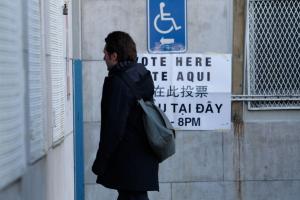
Gov. Bruce Rauner is on track to spend $50 million on legislative races this year. Even for a guy like Rauner, that’s a lot of money– nearly twice what he spent on his own campaign two years ago. Two Rauner allies, billionaires Ken Griffin and Richard Uihlein, are also spending tens of millions of dollars. The end game is taking down unions and squelching voting rights.
Spread the word