film

Ava DuVernay Thinks Little Brown Girls Should Be Space Travelers, Too

Mattie Kahn Elle
People seem to think that a movie or a television show or a book is "diverse" when there are "one or two black people or brown people, or one girl or a couple of girls," DuVernay says. "Inclusion is really half—half of the cast, half of the directors, half of the writers are women or girls, half of the room, more than half of the room is of color," she says. "I think we get really satisfied with less.

film

'The Wizard of Lies' – Robert De Niro's Bernie Madoff Drama is a Cheat

Simon Abrams The Guardian
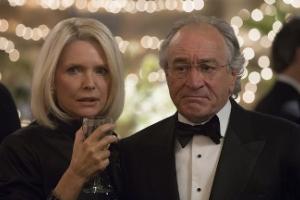
The film's creators may have the best of intentions, but their plea for greater understanding will likely fall on deaf ears since they’ve only inadvertently confirmed Madoff’s self-pitying defense by portraying members of the working class as collateral damage in the Bernie Madoff story. By normalizing Madoff’s behavior, 'The Wizard of Lies' thoughtlessly asks us to sympathize with a devil we don’t want to know.

film

'Elian': Film Review

Frank Scheck The Hollywood Reporter
Most fascinatingly, the film's coda features footage of the now 23-year-old Elian who still lives in Cuba and reveres the late Castro. Articulate and self-assured, he seems none the worse for his childhood trauma. Talking about the current state of relations between the two countries, he comments that Barack Obama’s history-making trip to the island country was important, but that it also “left much to be desired.”

film

What Risk Says About Julian Assange

David Sims The Atlantic
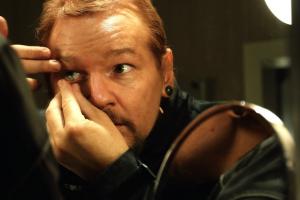
Risk is an incredibly gripping work, one made with an unprecedented level of access to Assange, but for all its intimacy, it still struggles to nail down its target. Instead, it’s more a story of Poitras herself, and the evolution of the movie she set out to make about Assange, who founded Wikileaks in 2006.

film

An Uneven Tribute to The Immortal Life of Henrietta Lacks

Lenika Cruz The Atlantic
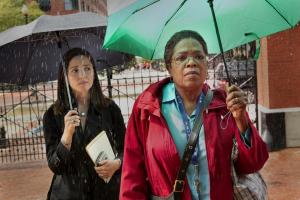
In HBO's film The Immortal Life of Henrietta Lacks, you learn about the miraculous clump of cells that changed medical science forever before really learning about the person who made and was killed by them. In 1951, a 31-year-old African American woman named Henrietta Lacks learned she was dying of cervical cancer. She sought treatment from a then-segregated Johns Hopkins Medical Center where a piece of her tumor was removed without her knowledge for ongoing research.

film

The Revelatory Horror of The Zookeeper’s Wife

Jacob Soll The New Republic
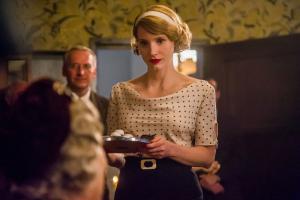
The Zookeeper’s Wife shows the Holocaust was not an easy existential battle fought between a massive evil machine and good, tough men. It was also made up of unrecorded domestic crimes, often of sexual aggression and abuse. What Caro makes clear is that a society that overlooks these transgressions is in dangerous territory. In attempting to understand these crimes and how to counter them, Caro challenges us to look closer to home, into the finer grain of the horror.

film

New Film Is a Double Portrait of Emile Zola and Paul Cézanne

Eric A. Gordon Hollywood Progressive
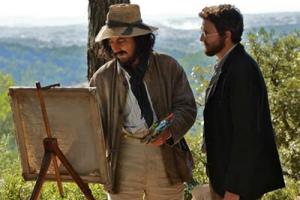
Their lives crossed paths diagonally. Zola started off fatherless and poor, but through his writing eventually joined the very bourgeoisie he mocked in his early work. By contrast, Cézanne came from a wealthy banking family but rejected his privilege to focus entirely on his work, depending, often unwittingly, on the kindness of his more successful colleagues, such as Zola himself and the painter Edouard Manet.
Subscribe to Film