Growing up in an SRO
Ripple
"Close to half of all county expenditures were spent on just five percent of the homeless population, who came into frequent contact with police, hospitals, and other service agencies, racking up an average of $100,000 in costs per person annually." That's a ton of money. And it's why the simplest solution to ending homelessness — giving them homes — makes so much sense.
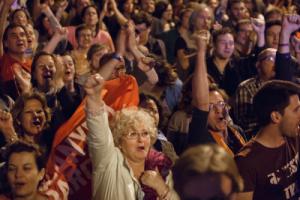
How Spain's 15M movement went from occupying city squares to city halls-without compromising its independence. An important part of progressives' recent electoral success can be traced to a strong network of locally organized 'social centers' across Spain. These are spaces where community members can interact and share ideas, whether that means organizing a demonstration, taking Zumba classes or checking out library book.
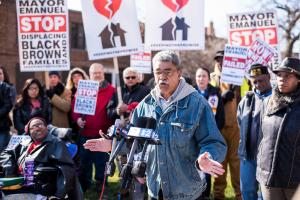
Gentrification is no myth, and saying so is magical thinking. Through oral histories and a solid grasp of urban history and urban geography, journalist GW Gibson shows not just its quite palpable and direct contribution to the displacement of low-income people, but, using New York City as his template, traces the radical decline of affordable housing city-wide. Case closed!
Chief Justice John Roberts grew up in a town that banned black residents. Places like Long Branch, Ind., were often called Sundown Towns. Only whites were allowed on the streets after dark. James W. Loewen published the first study of these towns ten years ago, just as Roberts was named to the court. Laura Wexler published one of the few reviews of the book. Along with the review, below, are links to the book's website and to the book's introduction.
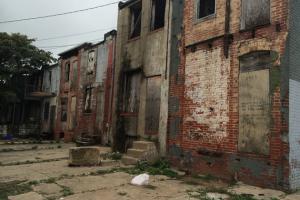
As Detroit seeks to leave bankruptcy behind and get back on its feet—ramping up development with construction of a light rail and a new hockey arena that will cost the city hundreds of millions of dollars—it is simultaneously bearing witness to a process that could evict up to 142,000 of its residents, many of whom are too poor to pay their property taxes.
Spread the word