As El Salvador Increases its Minimum Wage, Big Business Increases the Pressure on Workers
Equal Times
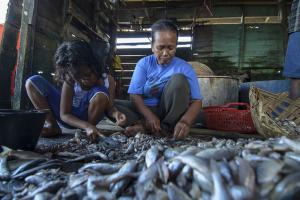
An estimated 60.7 percent of the world’s workers labor in the informal economy, without legal or social protections. While the impact of working without the freedom to organize is most dire in the world’s poorest countries, U.S. workers are not an exception to the types of labor rights abuses the described in a United Nations Report.
There is a specific set of behaviors that constitute gender-based violence at work that includes sexual violence, verbal abuse, threats of violence and bullying. A meeting in Brazil sponsored by the International Trade Union Confederation and the Solidarity Center discussed a campaign to shape a worker-driven International Labor Organization standard ending gender-based violence at work, based about successful initiatives by local worker organizations.
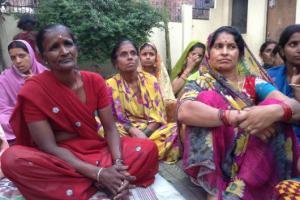
Domestic work is one of the few areas of work available for unskilled women workers in India -- the overwhelming majority of whom are illiterate or educated only up to the primary level. They frequently work seven days a week, enduring poverty wages [despite often working in multiple households], no paid leave, zero maternity or social protection, violence and unhygienic living and working conditions.
International Labor Organization (ILO) Conventions that protect worker rights should be binding. Just as international financial institutions have the power to enforce their regulations, so too the ILO should have the power to sanction states or multinational corporations that breach its principles.
Unions in Afghanistan want the new government to pass legislation on workplace safety and a living wage, and to focus economic development on agriculture in order to relieve massive unemployment. Both "hopeful and pessimistic,"about the future, the National Union of Afghanistan's Workers and Employees, while pushing for the right to collective bargaining and freedom of association, considers these distant aspirations.
Despite being a fundamental human right enshrined in international law, the right to strike is certainly not guaranteed for all workers. In fact, transport workers are one of the groups increasingly being excluded from the right to strike by way of outright bans or public service, essential services or minimum services requirements that severely limit that right.
Spread the word