Close But No Cigar: How America Failed to Kill Fidel Castro
The Guardian
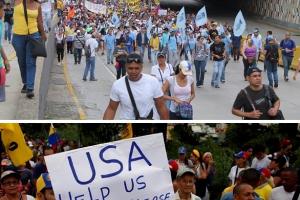
International media has provided a constant stream of stories and editorials about the collapse of the Venezuelan economy. Shortages of food and medicine, hours-long lines, incomes eroded by triple-digit inflation have dominated press reports. Adherents to this explanation say the downward spiral will continue until the chavistas are removed from power, either through elections or through a coup (most pundits don't care which). The reality is more complicated.
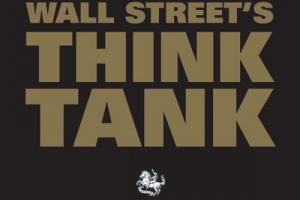
The Council on Foreign Relations is a supercharged, highly connected establishment think tank. While producing reports and staffing varied policy working-groups, its recommendations are invariably market-based. CFR leaders and members pass through the revolving door of the federal government to high positions of authority, no matter which party holds power. The book under review, Wall Street's Think Tank, charts the council's key links to US imperial policy.
The renewed focus, particularly on the left, on precariousness constitutes a recognition of the harsh reality of capitalism, and particularly of today’s globalized monopoly-finance capital. More than a century of Marxian political-economic critique allows us to appreciate the extent to which the conditions that Marx described, focusing on a small corner of Europe in the mid-nineteenth century, are now global, and all the more perilous.
The judicial coup against President Dilma Rousseff is the culmination of the deepest political crisis in Brazil for 50 years. Dilma's second victory sparked a heated panic among the neoliberal and U.S.-aligned opposition. The fourth consecutive election of a President affiliated to the centre-left PT (Workers' Party) was bad news for the opposition, because it suggested that PT founder Lu¡s In cio Lula da Silva could return in 2018.
The following excerpt is the Foreword to America's Addiction to Terrorism. Portside is pleased to share this with our readers. In the U.S. today, the term "terrorism" conjures up images of dangerous, outside threats: religious extremists and suicide bombers in particular. Harder to see but all the more pervasive is the terrorism perpetuated by the United States, itself, whether through military force overseas or woven into the very fabric of society at home.
Congress’s 1965 decision to limit immigration from Latin America and the Caribbean coincided with an increase in that immigration—largely, as a result of U.S. policies, including support for vicious dictatorships in many countries, the funding of civil wars in Central America, and the promotion of neoliberal economic programs throughout the region. The result is our current undocumented population of about 11.7 million, including some 8 million workers.
In a few words, it can be said that the book tells it like it is—it describes the vast governmental-industrial-legislative complex that controls our lives via war and violence. This is not conspiracy theory any longer—it is rooted in fact and record. The authors cite names, organizations, places, and dates that not only promote war, but also benefit from it financially.
Spread the word