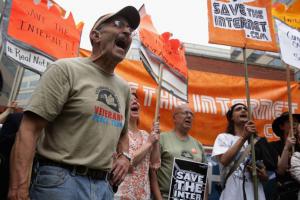
Net Neutrality Wins: The FCC will propose strong Title II regulation

T.C. Sottek The Verge
'The Internet must be fast, fair, and open.' The biggest revelation from the proposal is the decision to lump wireless networks in with wired broadband, something the FCC has avoided doing for years thanks to enormous pressure from Verizon and AT&T.

As Hollywood Funds a SOPA Revival Through State Officials, Google (And The Internet) Respond

Parker Higgins Electronic Frontier Foundation
A coordinated campaign by the Motion Picture Association of America follows a trend of lobbyists funneling money and gifts to state attorneys general, who are subject to fewer restrictions and disclosure requirements than elected officials at the national level. Google is the target today, but the real target is the open Internet, which depends on free and uncensored platforms to survive.

Net Neutrality: We Need a Better Deal

Eric Klinker Bittorrent Blog
If Internet service providers are allowed to give preferential treatment to certain kinds of traffic, the open Internet will have been paywalled shut. The solution lies in fairer regulation and in better, more people-powered technology.

‘Net Neutrality’ Turnaround as F.C.C. Plans for a Fast Lane

By Edward Wyatt The New York Times
The proposed rules are a turnaround for the agency on what is known as net neutrality — the idea that Internet users should have equal ability to see any legal content they choose, and that no providers of legal content should be discriminated against in providing their offerings to consumers.

Antitrust in the New Gilded Age

Robert Reich Robert Reich's blog
Some argue that the broadband market already has been carved up into a cartel, so blocking the acquisition would do little to bring down prices. Washington should examine a larger question beyond whether the deal is good or bad for consumers: Is it good for our democracy? We haven’t needed to ask this question for more than a century because America hasn’t experienced the present concentration of economic wealth and power in more than a century.

Edward Snowden: How We Take Back the Internet

Appearing by telepresence robot, Edward Snowden speaks at TED2014 (Mar 18) about surveillance and Internet freedom. The right to data privacy, he suggests, requires a fundamental rethink of the role of the internet in our lives — and the laws that protect it. Chris Anderson interviews, with special guest Tim Berners-Lee.
 
Subscribe to Internet