Chimes of Freedom: The Politics of Bob Dylan’s Art
Political Animal Magazine
One of the newer fields of academic study is called "Affect Studies," described by Maggie Doherty as the "humanistic and social-scientific investigations of the ways that feelings are generated, experienced, and interpreted" In this review, she explores how two authors use ideas generated by this field to explore the political life of feelings.
Harper Lee's classic novel was one of hope, young hope. Her last, Go Set a Watchman, a sad acknowledgment of the incredible power of racial hate in my home state of Alabama, reveals that Atticus turns out to be a Kluxer! An example of how America, especially the American South, has yet to confront, admit, and rectify the original sin of legal racialism enshrined in our founding documents - three fifths of a person.
Portraying her subject as a radical voice of the dispossessed, author Jacqueline Mulhallen presents the poet Shelley less as a romantic and more as a traitor to his own class for his revolutionary politics. Here is the Shelley who, though writing when the British working class was in its infancy, grasped and wanted to overturn the oppression under which they lived. It's that red Shelley who inspired among others Karl Marx, even as his poetry became part of the canon.
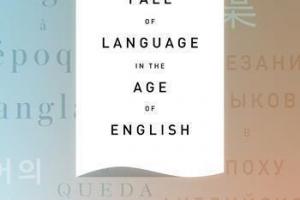
The spread of capitalism as a global system and neoliberalism as its dominant economic policy has its analogue in the triumph of English as its undisputed enabling linguistic. The book under review argues that not only is this single-language sway historically unprecedented in allowing universal communication, but that its flattening effects on native languages and national discourse come with their own disabling downsides.
The Guardian is known for it's best of laundry lists. A recent list of the 100 best English-language novels came with a demurrer from culture columnist Rachel Cooke, saying in effect: The ladies not meant for spurning - and that just 20 books by female authors in a best-of-100 list covering a 300-year period--especially in a listing of authors of fiction--is incomplete bordering on bizarre. Cooke elaborates on what should be on, and what she says can surely be removed.
Spread the word