
- How Social Media Normalize Fascism
- 60 Minutes Gets the Shiv
- Interactive ICE Mapping Tool
- Colbert is Just the Tip of the Iceberg
- The Emerging, Imperfect Coalitions Against Data Centers
- Public Funding for Local News Outlets
- A Short History of Sportswriting
- Still on X? Ask Yourself Why
- AI in Painful Detail
- Zines in Japan
How Social Media Normalize Fascism
By Paulo Antunes Ferreira, Links
In recent decades, social media has profoundly transformed how people relate to politics, changing the way ideologies are spread and power is contested. Although once celebrated as democratising tools, platforms such as Facebook, YouTube, Twitter/X, TikTok and Instagram have become fertile ground for the dissemination of fascist and authoritarian ideologies.
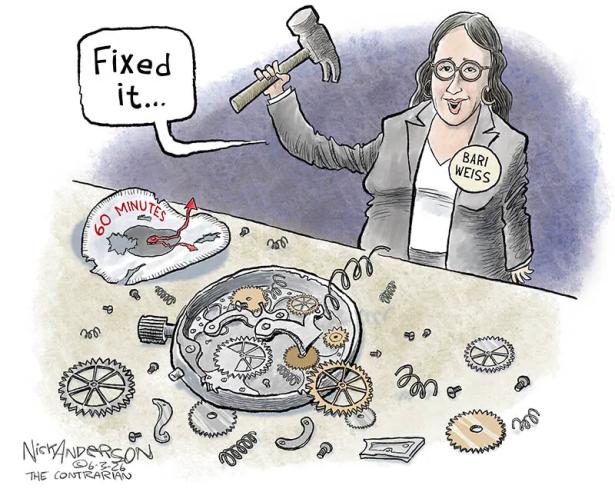
60 Minutes Gets the Shiv
“She’s Murdering 60 Minutes” By Jeremy Barr, The Guardian
The Trump Factor By Robert Reich, Substack
CBS News CEO Walks By Caroline Blair, People
By Emma Davis, Maine Morning Star
The Maine Immigrants’ Rights Coalition unveiled a digital mapping tool to connect immigrants and other Mainers with resources and data based on calls to the group’s U.S. Immigration and Customs Enforcement watch hotline. It includes information about the location of hotline calls, the nature of the calls, and data on enforcement obtained through public records requests.
Colbert is Just the Tip of the Iceberg
By Timothy Karr, Free Press
In the shadows of the media glare surrounding CBS’s Trump-sanctioned cancellation of Colbert stand scores of other individuals, organizations and entities of lesser renown who’ve found themselves at the receiving end of Trump-administration efforts to censor their points of view.
The Emerging, Imperfect Coalitions Against Data Centers
Everybody Hates Data Centers By Paul Messersmith-Glavin, Truthout
Monterey Park CA’s Permanent Ban By Sanya Mansoor, The Guardian
Democrats on the Fence By Kelsey Tamborrino, Christa Marshall, Timothy Cama and Zack Colman, Politico
Public Funding for Local News Outlets
By Parker Molloy, Dame
As newspapers disappear and hedge funds hollow out newsrooms, state governments are experimenting with public funding models to preserve accountability reporting before more communities become news deserts.
A Short History of Sportswriting
By Robert Lipsyte, TomDispatch
While they erected a predominantly White male pantheon, sportswriters insisted on proclaiming the righteousness, meritocracy, and character-building nature of their subject. Even the skeptics who snidely mocked the demigods when they failed did so in a way that maintained their importance as signifiers of the best in the best of all worlds.
By Jonathan Liew, The Guardian
The levels of fake content are out of control. The user interface seems specifically designed to push content you did not ask for. And deepest sympathies if you ever decide to watch a video and find yourself finessed down a wormhole of street brawls, arcane arguments, talkshow interviewers “owning” interviewees or vice versa.
AI in Painful Detail
Pope Leo’s Encyclical By Nitish Pahwa, Slate
Using Chat By Malin Hay, London Review of Books
AI Accelerationism By David S. D’Amato, CounterPunch
By Natsuko Fukue and Atish Patel, The Japan Times
Despite the decline of the publishing industry, self-publication and handmade “zine” magazines are growing in popularity in Japan, reflecting the country’s enduring love of paper in the digital era. On one weekend in Tokyo, hundreds of visitors flocked to a zine fair showcasing a wide range of handmade magazines in different sizes and formats.
Spread the word