
Days before Juneteenth, I was talking with my teenage sons about the upcoming holiday. My youngest, a smart and generally socially aware 14-year-old, asked, “What’s Juneteenth? Is it related to Pride month?”
His older brother responded by calling him an idiot. While I don’t approve of that kind of language, I was deeply surprised by the gap in his knowledge. “No,” I explained, “it’s a day to celebrate the end of Black people’s enslavement in the United States.” Later, I asked him to join me at a Juneteenth celebration hosted by the Smithsonian’s Anacostia Community Museum here in Washington, DC. He generally prefers video games to museums, but when I told him he needed to go to educate himself, he knew I wasn’t backing down. He went.
The music, food, and exhibits we encountered all celebrated freedom in the United States. But as the country looks toward the anniversary of U.S. independence, the day offered a stark reminder that freedom in the U.S. remains an unfinished, 250-year-old experiment. It represents a constant pursuit of equity, dignity, justice, and safety—yet it has never applied to everyone equally.
Long before the U.S. declared its independence, its seeds were sown in land where Indigenous peoples were displaced or killed, and where African peoples were forcibly migrated and enslaved to build the country’s very foundation. The Founding Fathers, who lauded freedom for themselves, systematically denied it to millions of others.
Today, that hard-won freedom is under relentless attack. Mass incarceration persists at staggering rates, fueled by renewed calls for its expansion from leaders who routinely denigrate Black youth and immigrants. Simultaneously, the voting rights of Black Americans—once protected by the crowning achievement of the Civil Rights Movement—are being steadily eroded.
Yet, a history laden with violence and injustice can be disrupted. It always has been—by heroic champions like Sojourner Truth, John Lewis, and Bryan Stevenson, and by the people-powered movements fighting for voting rights and an end to mass incarceration.
Recently, we witnessed what that disruption looks like in practice. Freedom grew when Chris McBride was released from a Maryland prison after more than 30 years because he showed his family, community, and a Maryland judge that he was deserving of a second chance. His release was made possible by the Second Look Act—a sentencing reform bill passed after intensive lobbying by activists and formerly incarcerated people on behalf of young people convicted decades earlier. At his resentencing, Frederick County Circuit Judge Scott Rolle asked McBride if he understood the immense responsibility before him. His success would set the tone for the 650 other incarcerated individuals in Maryland who are now eligible for a second look under the new law. McBride responded that he “relished” the challenge, and the judge granted his release with a handshake and a hug.
Video above: Hear from advocate Joel Caston on the importance of giving people a second look.
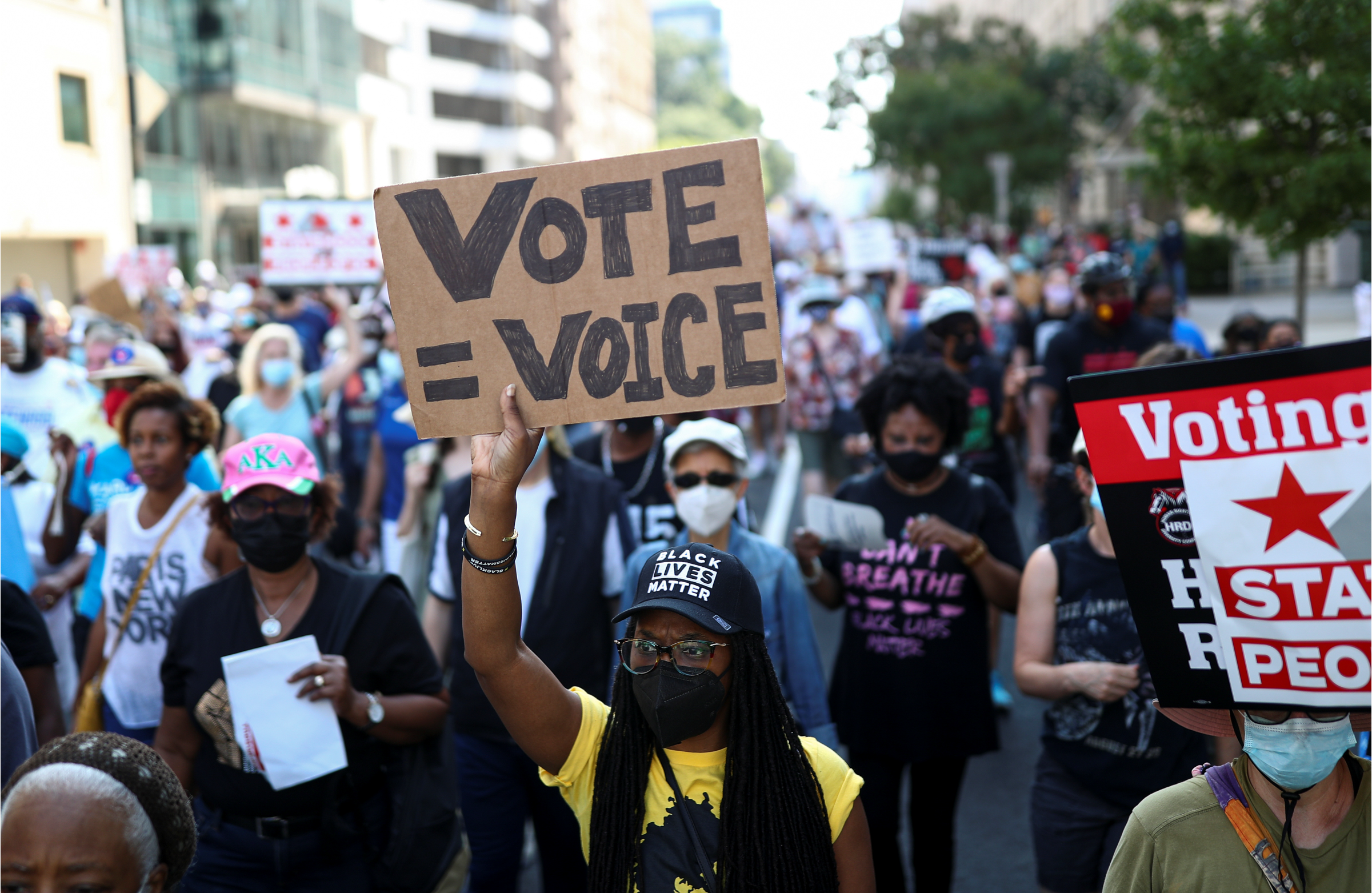
Progress is also taking root in Missouri where the governor is poised to sign bipartisan legislation that includes a provision to expand voting rights to most people in the state serving probation or parole. With advocacy efforts led by the Missouri Voter Protection Coalition, this change will directly confront deep racial disparities. Research from The Sentencing Project found that one out of every 26 Black adults in Missouri were disenfranchised because of a felony conviction.
This progress is a victory for every champion of freedom, but the work is far from over. It won’t be completed in my lifetime. Fortunately, I know a 14-year-old who is proving up to the task.
Earlier this month, my son graduated from middle school and was selected by his teachers to speak at the promotion ceremony. Addressing his peers, he compared their lives to “the most extraordinary and beautiful book ever written. In the reading of this book, you will feel joy, pain, comfort, heartbreak, and everything in between.”
His metaphor captured the essence of the American story. He told the audience that while we cannot go back and rewrite earlier, painful chapters, we can fully engage with the present to shape future passages.
As we pause during this milestone historical season, we must find inspiration from the past to write our own next chapter. We must tell our lawmakers that a criminal justice system marred by racial disparity and extreme punishment has no place dictating the contours of our democracy or deciding who can access the ballot box. We must demand that Congress stop investing billions of dollars to expand systems of punishment and exclusion and instead invest in families, opportunity, and communities.
We are all co-authors of this nation’s future. The next chapter is already being written by the choices we make today: what we teach our children, what we demand of our leaders, and whose freedom we choose to defend. Let us write a history that all of us can celebrate.
Policy, advocacy, and the fight to end mass incarceration. I’m Kara Gotsch, Executive Director of The Sentencing Project. I share unfiltered updates on the reform movement, research deep dives, and reflections on the long road to justice.
Mass Incarceration and Other Bad Ideas: Challenging the status quo, one criminal justice policy failure at a time.
Spread the word