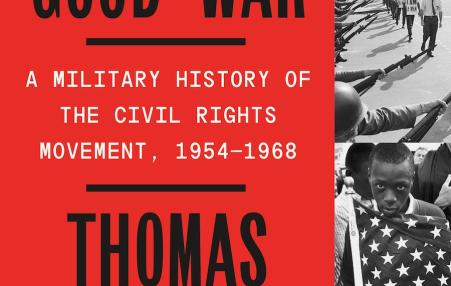
A Compelling Military History of the Civil Rights Fight
The Guardian
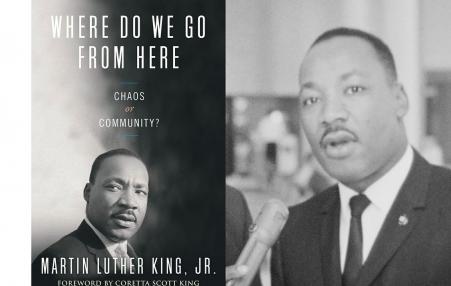
"I left India more convinced than ever before that nonviolent resistance was the most potent weapon available to oppressed people in their struggle for freedom." - "The Autobiography of Martin Luther King Jr.," edited by Clayborne Carson. In this decade - in which more people are using nonviolent resistance than ever before - scholars and practitioners alike would do well to consult the pragmatic and principled wisdom of Gandhi and King in building a way forward.
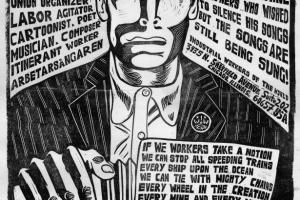
Joe Hill -- executed 100 years ago by a Utah firing squad -- knew the power of harnessing creativity. The Wobblies embraced songs, comics, soapboxing, and other creative tactics in reaching out to unorganized workers as well as in direct actions on the job site. “A pamphlet, no matter how good, is never read more than once, but a song is learned by heart and repeated over and over,” Hill wrote in a letter to the editor of Solidarity in November 1914.
I celebrate Radical Reconstruction, a brief moment of glory, no matter how blindly and halfheartedly we, as a nation, did it. Did Reconstruction end racism? No. Does that make it a failure? No again. Considering it a failure is like considering the civil rights movement a failure because it only abolished segregation and not racism.
"We just want to simply tell America what their faith is about. America talks about democracy, but they’ve kept us from voting for years. And even when they give us the vote on paper, politically, they turn around and take away the important part of what we fought for and what they said they were giving, all right? The truth is that we have to work together to save ourselves politically, save ourselves spiritually and save ourselves physically."
When Zekerullah's teacher, a teacher accustomed to beating pupils, asked the class elementary questions about the environment, Zekerullah had definitely done his homework. But among his recent studies were the history of nonviolent movements, led by people like Gandhi and Dr. Martin Luther King, to resist oppressive forces.
Spread the word