Portside aims to provide material of interest to people on the left that will help them to interpret the world and to change it.

If We Bring The Good Life To All, Will We Destroy The Planet?

Nurith Aizenman NPR
rice harvesting outside Hanoi, VN Only one country comes even close to delivering the good life in a sustainable way: Vietnam succeeds on six social indicators — including a life expectancy above 65 years and providing sufficient nutrition — while staying within its limit on every environmental threshold except carbon emissions.

Bonds of Memory and the Fight for Economic Justice

Michael Honey Commercial Appeal
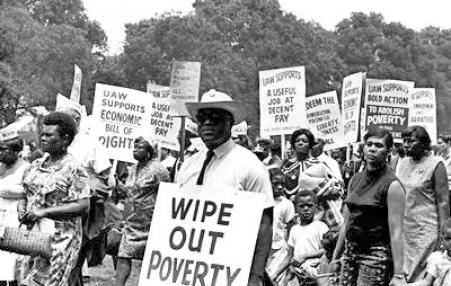
Sanitation workers marching in Memphis threatened by national guards. The bonds of memory and today’s vast disparities in wealth and well-being tell us that we must continue the struggle launched by workers and by King in the spring of 1968. Today, more people live in poverty in America than in 1968. Now as then, the majority of the poor are “white” but poverty’s heaviest concentration is among people of color, especially young people and women. Poverty exists in part because most of the new jobs in Memphis, as in America, do not pay a living wage.

Friday Nite Videos | Feb 9, 2018

Portside
Russia Hacks Voter Rolls & Rob Porter Resigns. "Unforgettable." Why Is the Naked Mole Rat So Weird? Our Cartoon President | Series Premiere. A Persuasive Case That Presidents Can Be Indicted.

We Must Cancel Everyone’s Student Debt, for the Economy’s Sake

Eric Levitz New York Magazine
Students at a graduation ceremony Student debtors were, in many, many cases, persuaded to make poor financial decisions by their own government — which, as the owner of their debts, now stands to profit from those mistakes. By wiping the slate clean, Uncle Sam wouldn’t just improve the macroeconomy, but also increase its fairness, and reduce racial inequality.

Extreme Poverty in the US Is A Political Choice of the Powerful

Kenneth Surin CounterPunch
A homeless child in Bend, OR. Following his US fact-finding mission, the United Nations Special Rapporteur on Extreme Poverty and Human Rights concluded extreme poverty in the US “is a political choice made by those in power. With political will, it could readily be eliminated.”

I Helped Sell the False Choice of War Once. It’s Happening Again. (Now with Iran)

Lawrence Wilkerson The New York Times
Ex- Bush official confesses. President George W. Bush would have ordered the war even without United Nations support. "That led to a war that resulted in catastrophic losses for the region and the United States-led coalition, and that destabilized the entire Middle East". This should not be forgotten, since the Trump administration is using much the same playbook to create a false impression that war is the only way to address the threats posed by Iran.

Trump’s Financial Arsonists: The Next Financial Crisis -- Not If, But When

Nomi Prins TomDispatch
Written one week before the current Wall Street tumble, economist Nomi Prins writes: Watch out. Even in the seemingly best of times, neglecting Wall Street is a dangerous idea. With a rag-tag Trumpian crew of ex-bankers and Goldman Sachs alumni as the only watchdogs in town, it’s time to focus, because one thing is clear: Donald Trump’s economic team is in the process of making the financial system combustible again.

$700 Billion For What? How Runaway Military Spending Keeps Us from Meeting Our Real Needs

Mark Haim The Indypendent
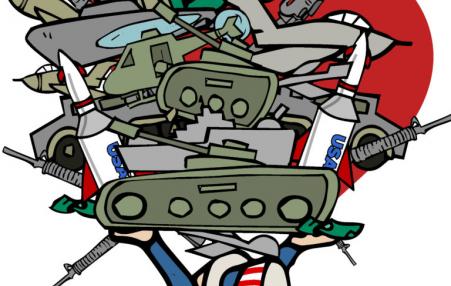
During the Cold War, the supposed threat of Communism was the justification for super-sized budgets and a continuous stream of wars and interventions-some overt, others covert or proxy-none of which had anything to do with defending the United States-and none of which ended in victory. These were sold to the American people as being fought to "defend freedom" or "support democracy." After the Cold War ended it became more difficult to justify such a massive military.
Subscribe to Portside