Direct Action: Protest and the Reinvention of American Radicalism
Portside
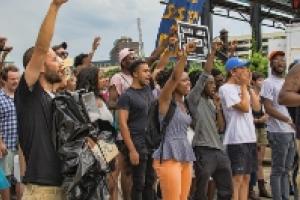
Hope belongs to the left. Social hope entails searching collectively for public solutions to our public problems rather than pretending that everything is up to the solitary individual. Hope creates action, but it is equally true that action creates hope. It is the action of movements, rooted in people's needs and longings, attempting to change the world in small ways and large.
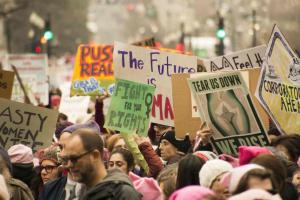
The women's marches in Washington DC and around the country were stunning, inspiring and the first of a million steps that will be needed to build the resistance to Trump. It might not have been as black, brown or working class as many might have liked. But criticizing it from the sidelines doesn't help anyone.
Duterte's campaign to rid the Philippines of drug users and pushers through extrajudicial executions elicited shock even among the most hardened observers. And his now legendary cursing of President Obama as a "son of a bitch" - part of an angry farewell to a long-standing alliance with Washington and an embrace of China - upended Asian geopolitics.
The Obama era reminded us all that popular movements play an essential role as catalysts for political action. The enthusiasm generated by the Sanders campaign was a surprise, but it did not spring from the void. Any new radicalism needs to learn from the past, but not simply to reenact it. The new American radicalism must be open and multifaceted, speaking the language of American society but receptive to insights from an increasingly interconnected world.
Six year's ago, Mohamed Bouazizi's protest inspired millions of others to protest their regimes and the status quo. The protests did not bring the renewal that was promised by the branding phrase "Arab Spring," but rather what followed were more of the old calamities. To say that the old Arab regime is better than the revolt against it is like saying that the accumulation of pus in a boil is better than incising the boil and letting the pus out.
Rebel Crossings charts six 19th century socialists as they journey from the constraints of Old-World Britain to a New-World America. They were part of a wider historical search for self-fulfillment and an alternative to a cruelly competitive capitalism. The book surveys the interaction of feminism, socialism and anarchism, bringing fresh slants on political and cultural movements and upon influential individuals including Walt Whitman, Eleanor Marx, and William Morris.
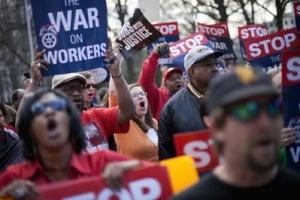
With the far right now soon to command government, ongoing movements are also growing to challenge corporate domination, white supremacy, environmental degradation, union busting and organize workers in low-paid industries. Written before the November election, Sarah Jaffe's book chronicles these and other struggles, letting the activists--many new to politics-speak, and suggesting the fight for social and economic justice is ongoing, no matter which party reigns.
'Luckily, not everyone has been glued to the screen, eternally watching The Donald. From Black Lives Matter to the climate change movement, activists have, as TomDispatch regular Rebecca Gordon points out, never stopped working to make this a better world and, as she indicates, if we can take our eyes off the media spectacle-cum-circus for a few moments, they offer us a kind of hope for our future that shouldn't be ignored.' - Tom Engelhardt
It is 1968. Year of blood. Year of protest. Year of insurgency. Year of a pivotal election: Republican Richard Nixon versus Democrat Hubert Humphrey. I decide that Nixon and Humphrey are indistinguishable, and I refuse to vote. I encourage others to do the same. It's a mistake I regret to this day. At first, students on the left were full of hope about the 1968 election...The only way Donald Trump does not become president of the United States is if Hillary Clinton does
Spread the word