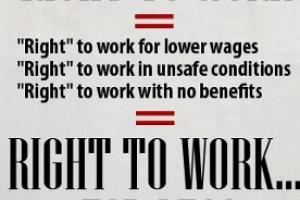
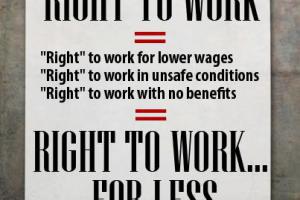
Right-to-Work Laws are Every Republican Union-Hater's Weapon of Choice
The Guardian
The court case could pose a major threat to public-sector unions whose clout grew in the 1970s after the high court upheld laws requiring all employees who benefit from collective bargaining to contribute to the union. Although teachers and other public workers may refuse to pay dues used to support a union's political activities, they can still be forced to pay a so-called "fair share" fee that covers operation costs.
In 2010 two former employees of Integrity Staffing Solutions, a temp agency that supplies workers at many of Amazon’s U.S. warehouses, sued the company demanding back pay for the time they spent in security lines after clocking out at Amazon warehouses in Nevada. On Oct. 8 the Supreme Court will hear arguments about whether that time counts as work.
Historical discrimination, demographics, and public funding have left home care workers at the very bottom of the American work hierarchy. The wages these workers earn are painfully low: the median salary for a personal care aide is $19,910 annually, or $9.57 an hour; a home health aide earns $20,820 or $10.01 per hour. On the Bureau of Labor Statistic's list of 30 fastest-growing jobs, personal and home care aides are the worst paid.
The Obama Administration’s new rules will likely put an end to the Supreme Court’s ability to move the goalposts every time someone raises a new objection to the administration’s policy. Now, the country will have to wait to find out whether Hobby Lobby actually permits this latest set of rules — or whether the language in the Supreme Court's Hobby Lobby decision was simply Lucy pulling away the football one more time
Spread the word