The Trump NLRB’s Anti-Labor Day
Capital & Main
 The National Labor Relations Board is not just changing workplace rules but reversing longstanding precedents.
 The National Labor Relations Board is not just changing workplace rules but reversing longstanding precedents.
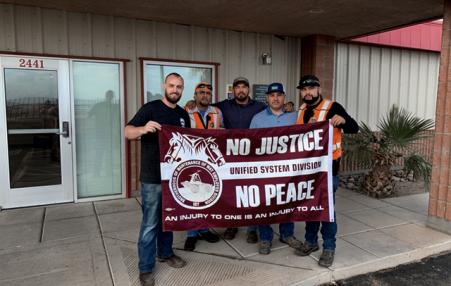 Last week my travels across the continent and among railroad track workers found me between Phoenix and East L.A.
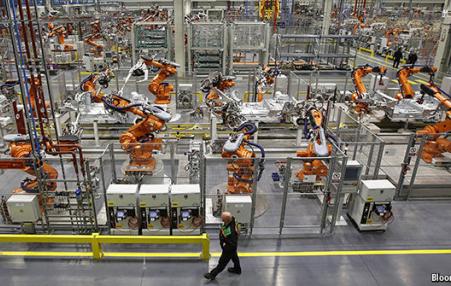 The drop continues a trend that except for a pause during the 2008 financial crisis, has been ongoing since the 1980s, when the share of organized labor was roughly double what it is today.
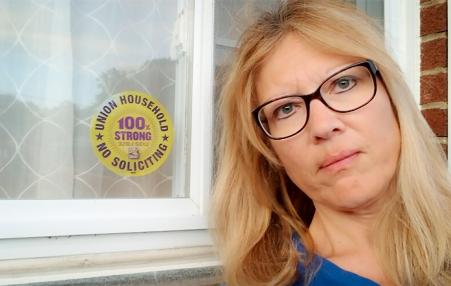 A union buster may be coming to your door.
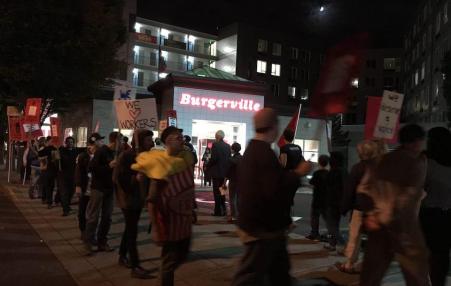 Workers at Burgerville voted to form a federally recognized union — the first in more than 40 years among fast-food employees nationwide. Now the Wobblies dream of organizing the entire Burgerville chain.
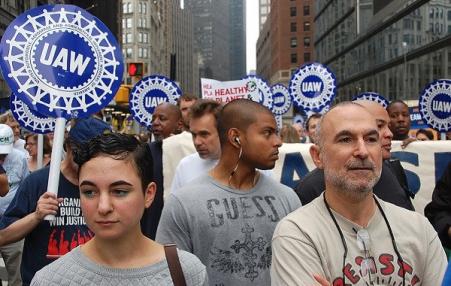 Overall membership was up slightly, by 262,000. The increase included 166,000 in the private sector; 96,000 in the public sector.
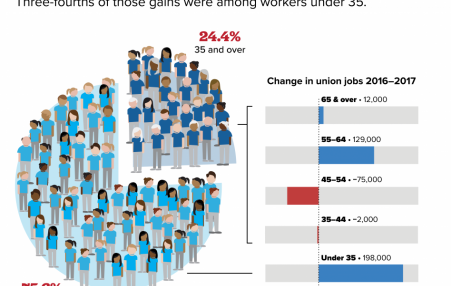 The Bureau of Labor Statistics released its annual report on union membership on January 19th, 2018. There were several spots of bright news for unions.
 Reader Comments: Whither the Resistance - Senate Dems Need Spine; Open Letter to Historic Women's March; And this is Just the First Two Weeks; Readers respond to Bhaskar Sunkara, "Our Alternative"; Union Membership Continues Decline, Building Trades Leadership Makes Deal, Undercuts Rest of Labor; Resources - How to Resist, What to Do;Announcements - Vito Marcantonio Forum; Igniting the Socialist Resistance Against Trump; Never Forget the Japanese Internment; and more..
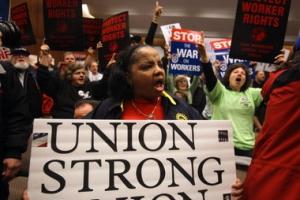 The new figures have just come out, and we are slightly down again.
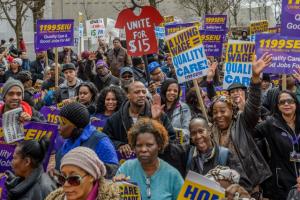 A new report links the drop in union membership with the rise in income inequality. But labor activists are finding new ways to help workers.
Spread the word