Inside Every Foreigner
London Review of Books

We're under attack from climate change-and our only hope is to mobilize like we did in WWII. It's not that global warming is like a world war. It is a world war. And we are losing. Defeating the Nazis required more than brave soldiers. It required a wholesale industrial retooling. In this war we're in-the war that physics is fighting hard, and that we aren't-winning slowly is the same as losing.
In David Looseley's take on the iconic French chanteuse Edith Piaf, her notoriously elusive life story is rendered as cultural history, drawing out what Piaf meant - and still means - to France and to her wider audience. Looseley notes that her musical persona was highly and brilliantly constructed. She projected a stage mask of suffering that was all the more affecting because the audience saw there was deprivation behind it. With Piaf, you underwent her.
In the period between the world wars, Stefan Zweig was among the world's best-known authors. His books would soon fuel Nazi bonfires. Zweig held that humanity could no longer afford the belligerent nationalism that had led them into the Great War. Yet Zweig was struck dumb by post 1933 events. That failure, the reviewer says, was of imagination, not nerve. Against the Nazis' depredations, all the consummate writer and speaker could muster was nostalgia for a lost world.
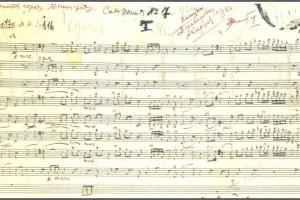
The story of the 872 day Nazi siege of Leningrad, the humans who survived it, and the more than one million who died, the story told in Shostakovich’s Seventh symphony, is one of humanity’s greatest and most heroic tales ever. Always Russia’s city of the arts and music, Leningrad is also a city of revolution. Daunted and desperate, the spirit of Leningrad’s residents is really the ultimate determinant of its survival. Shostakovich’s symphony rallied his fellow citizens.
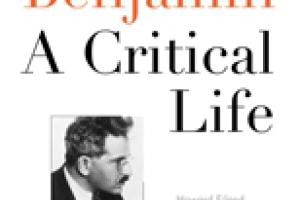
Walter Benjamin found his calling after accepting he would never get a job as an academic, so he junked hitherto unfathomable reflections on language to cover contemporary culture, with an emphasis on its more popular forms, for newspapers and general publishers. His radio broadcasts, many aimed at children, show writing that is engaging, vivid and, above all, understandable. Conclusion: the best thing that ever happened to the man was his failure to land a lectureship
Scott McLemee predicts another round of slamming/defending Nazi-tool philosopher Martin Heidegger with the forthcoming English publication of his The Black Notebooks...l'affaire Heidegger has been recycled on at least three or four occasions. It's as if the shock of the scandal was so great that it induced amnesia each time. Trashing Heidegger distracts us from our own appalling national stupidities and our galling national avarice -- our own little darkenings.
Spread the word