
Obada Shibly couldn’t take it anymore. After a teenager was shot to death at a grocery store in Jaffa in late June — one of more than 140 Palestinian citizens killed this year alone — the Palestinian healthcare worker took to Instagram to express his frustration. “Why does a 16-year-old boy, shot and covered in blood, scream one sentence before he dies: ‘What did I do?’” he asked in a video he posted to his account.
Then Shibly proceeded to direct his anger over the epidemic of organized crime plaguing Palestinian communities in Israel toward an explicit target: Arab members of the Knesset. “We, the people, decided that you should be one hand,” he declared. “Either you unite, or none of you should ask for our votes.”
Shibly’s video quickly went viral among Palestinian citizens, garnering over 14,000 likes and more than 678,000 views. His appeal captured a raw sentiment increasingly difficult for Palestinian politicians in Israel to ignore. With a national election set for October, pressure is mounting on the four Arab parties — Hadash, Balad, Ta’al, and Ra’am — to run as the Joint List, the alliance that once brought together movements with vast ideological differences and, at its peak in 2020, won a historic 15 Knesset seats.
But since the four parties announced their intention to revive the list in January, after a mass demonstration against organized crime in Sakhnin, they have been beset by fundamental divisions.
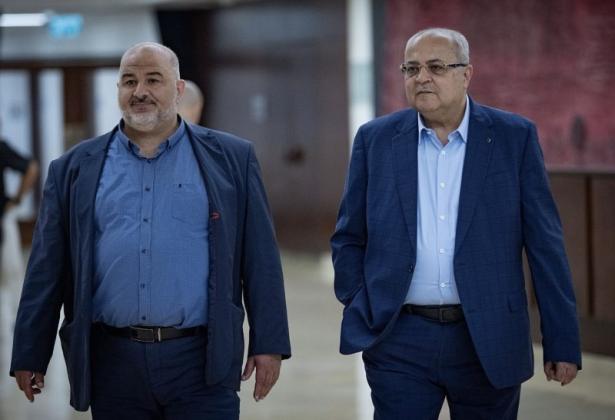
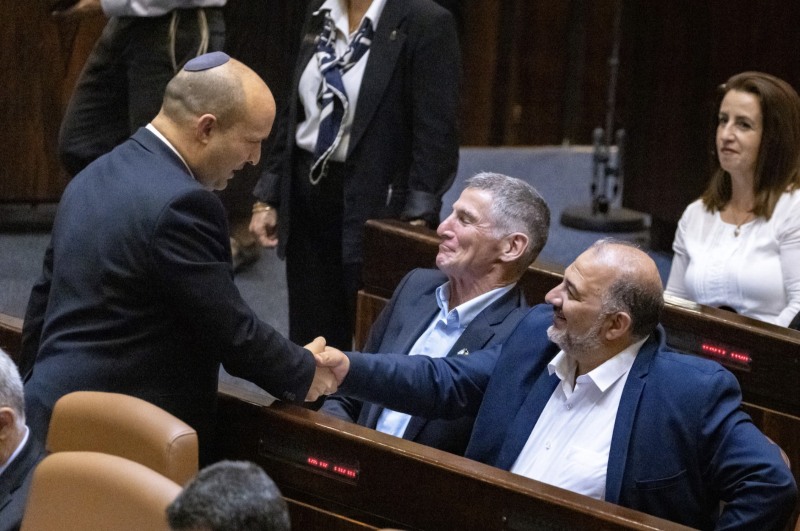
Ra’am chairman Mansour Abbas has sought commitment from the three other parties that he could split from the Joint List in order to join an anti-Netanyahu coalition, and that they would support the government from the outside. Hadash, Balad, and Ta’al have been unwilling to accept this condition, and Hadash announced in early June that they, along with Ta’al and Balad, will plan to move ahead with reestablishing the Joint List without Ra’am, noting that “the door was still open for Ra’am to join” ahead of the election.
Indeed, rebuilding the Joint List may be more difficult now than at any point since its creation in 2015. The parties are divided not simply by rivalries over candidates, seats, or leadership, but by two increasingly incompatible ideas about how Palestinian political power should be used inside the Israeli political system.
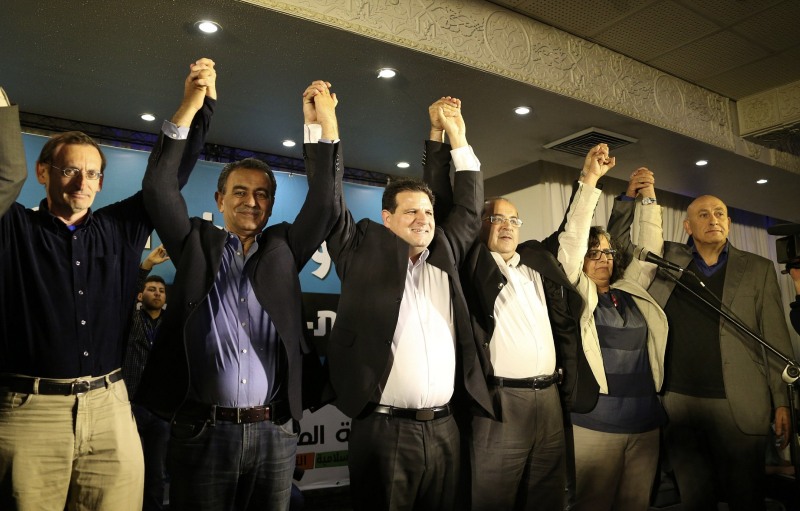
Abbas, who made history in 2021 by joining Israel’s governing coalition, argues that precisely because no favorable governing coalition is on offer, Palestinian citizens must use their electoral weight to bargain for whatever concrete gains they can extract. The leaders of the three other parties draw almost the opposite conclusion: Joining such a government risks turning Arab parties into a safety net for another Zionist coalition rather than a source of power for their own community, and lends legitimacy to a political system that does not recognize Palestinian citizens as an equal national collective.
“One says: We want influence, even through the coalition or from inside the government. The other says: We should remain in opposition, or at most support from outside,” explained Shirin Younis, a veteran journalist and expert on Israeli politics. “The public wants unity, but politically, bringing these two approaches into one list has become very difficult.”
This disagreement carries particular weight ahead of the coming election. Palestinian turnout could determine whether Israeli Prime Minister Benjamin Netanyahu and his far-right allies remain in power, and they may take drastic action to contain and suppress Palestinian voting power. Yet many of the politicians positioned to replace them — figures such as Naftali Bennett, Avigdor Liberman, Gadi Eisenkot, and Yair Lapid — do not offer a fundamentally different approach to Palestinian rights.
Meanwhile, new actors including the Democrats and the Jewish-Arab party A Place for Us All also see an opening among Arab voters disillusioned with the traditional parties. Just as the Palestinian vote inside Israel may be more consequential than ever, the battle to capture that vote — and to determine what it should be used to accomplish — has become more fragmented than ever.
What counts as influence?
The competing visions now dividing Palestinian politics in Israel are rooted in distinct political traditions.
Hadash, known in full as the Democratic Front for Peace and Equality, is the oldest organized force in this landscape. Formed in 1977 by the Israeli Communist Party, whose roots stretch back to the early 20th century, Hadash defines itself as a Jewish-Arab socialist front committed to equality, ending the occupation, and securing civil and national rights for Palestinian citizens. Its long history has afforded it a “big brother” status in Arab politics, though critics argue that the party has lost much of its former momentum in recent years.
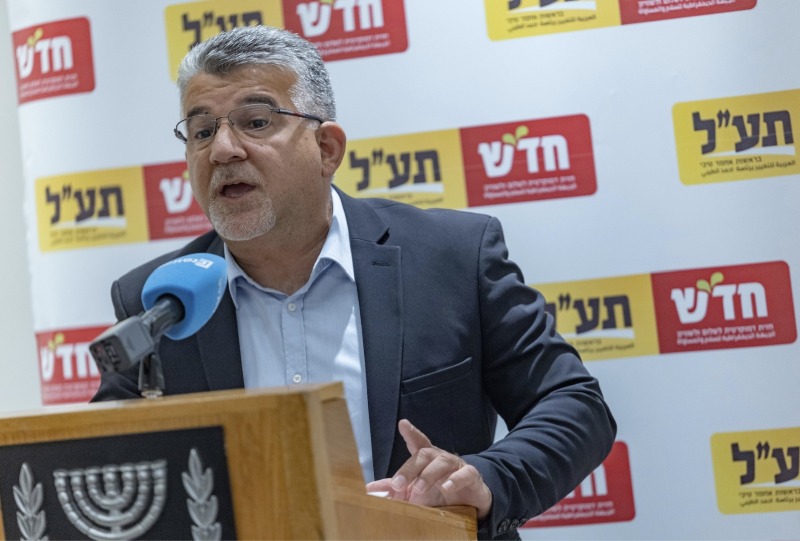
Balad, founded in the mid-1990s by Palestinian intellectuals, activists, and national figures, emerged from a tradition of left-wing and grassroots Palestinian nationalism. It emphasizes collective rights, Palestinian identity, and the goal of transforming Israel into a state of all its citizens — and as such, it has also been among the most aggressively targeted Arab parties in Israeli politics, repeatedly facing smear campaigns and attempts at disqualification.
After a last-minute split with Hadash in 2022, Balad ran alone and narrowly failed to cross the electoral threshold. Today, however, its leaders appear to be confident about the renewed strength of its voter base.
Ta’al, the Arab Movement for Change, is closely identified with its longtime leader Ahmad Tibi, one of the most prominent Palestinian politicians in Israel. Although formally an independent political party, Ta’al functions less like a conventional party with broad internal structures than as a political vehicle centered around Tibi himself.
Despite their differences, Hadash, Balad, and Ta’al have generally shared a politics of opposition, seeking conditional parliamentary influence from outside ruling coalitions. That is what most clearly distinguishes them from the United Arab List, known by its Hebrew acronym Ra’am, which emerged from the Southern Branch of the Islamic Movement in Israel.
The Islamic Movement itself split in the 1990s over participation in Knesset elections: The Southern Branch chose parliamentary politics, while the Northern Branch continued to boycott national elections and was outlawed by the Israeli government in 2015. In his willingness not only to run for office but to bargain with Israeli governments, Abbas has pushed Ra’am’s parliamentary strategy further than any prior leader.
Yet Abbas insists that the competing approaches of Israel’s Palestinian parties does not necessarily make cooperation impossible. “In the end, it could be one list with two approaches, or two lists that act through agreements of cooperation and coordination,” he told +972.
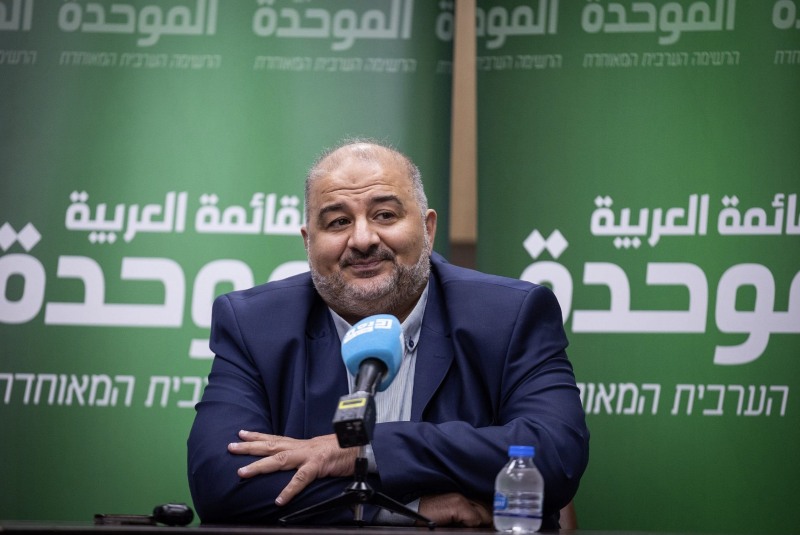
In our conversation, Abbas repeatedly stressed that he was not ruling out a four-party Joint List. But any such alliance would have to contain a contradiction that has only become sharper since Ra’am joined the Bennett-Lapid coalition in 2021: Abbas remains willing to negotiate with, support, or even join another anti-Netanyahu government if he believes doing so will create tangible gains for Palestinian citizens.
For Balad, that is precisely the problem. Sami Abu Shehadeh, the party’s leader, rejects the assumption that the anti-Netanyahu camp should be treated as a political partner simply because it opposes Netanyahu. “Jewish Israeli society is a racist society; the leadership of both camps, those with Netanyahu and those against Netanyahu, does not see us as a legitimate player,” he argued. “I wish there was a candidate for prime minister in Israel who had any kind of basic human approach to their politics.”
Hadash reaches a similar conclusion, albeit through somewhat differing language. Yousef Jabareen, who heads the party’s list for this election, argues that the current government is not an aberration but an expression of a much broader shift in Israeli politics. “Racist positions and statements have seeped into the Israeli mainstream,” he said, “along with a view of Arabs based on suspicion and hostility.”
Abu Shehadeh and Jabareen’s skepticism is reinforced by the statements of politicians most likely to form an alternative to Netanyahu. Naftali Bennett has repeatedly insisted that any future government he leads must be Zionist and exclude Arab parties. Avigdor Liberman, another potential partner in an anti-Netanyahu coalition, has an even longer history of delegitimizing Palestinian political participation, including describing Arab lawmakers as a “fifth column.”
For Abu Shehadeh, such statements expose the central contradiction facing Palestinian voters: The anti-Netanyahu camp may need high Arab turnout to defeat the current government, but they reject independent Arab political power as a legitimate basis for governing. The disagreement among the Arab parties is not really over whether political influence matters. It is over what counts as influence in the first place — and whether entering the rooms where power is exercised necessarily gives Palestinian citizens more of it.
‘Imagine if Arab turnout was 70 percent’
With the Jewish Israeli electorate divided between two largely entrenched blocs — one loyal to Netanyahu and one determined to remove him — both camps have relatively little room to expand by winning voters from the other side. This means that high Palestinian turnout would be one of the few variables capable of significantly altering the parliamentary map.
For Abu Shehadeh, this potential is where the danger begins. Netanyahu’s camp plainly benefits from low Palestinian turnout. Yet Abu Shehadeh argues that parts of the anti-Netanyahu camp, in their quest to secure a Zionist majority that does not rely on Arab parties, also prefer an Arab vote that is fragmented or politically contained.
That fear extends to possible efforts to disqualify Arab parties or individual candidates ahead of the election. Abu Shehadeh warned that such moves may not come exclusively from Netanyahu’s allies, arguing that politicians seeking to assemble a government without Arab participation could also benefit from restrictions on independent Palestinian participation.
Netanyahu, meanwhile, already renewed pressure on the Islamic Movement in November 2025 when he outlawed “part of the organization” and said he would work to “complete the process soon” — a clear warning with potentially serious implications for the southern branch from which Ra’am emerged.
The threat to Arab political participation, however, does not depend solely on the specter of disqualification. Years of incitement, repression, political exclusion, and escalating violence have helped produce something electorally potent in its own right: despair. For Yousef Makladeh, head of the polling and research firm Statnet, Netanyahu understands this dynamic well.
“Imagine if Arab turnout was not 53 percent as it was in 2022, but 70 percent,” Makladeh said. “Netanyahu would not even have dreamed of forming a government.” But this time, Makladeh added, Netanyahu does not fully control the situation.
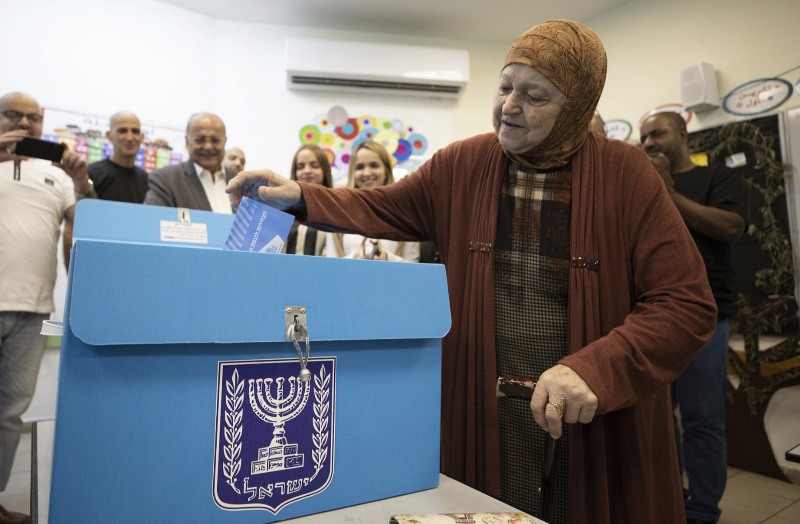
Netanyahu’s most viable route back to power, in other words, may not require persuading large numbers of new voters to support him, but simply making sure that enough Palestinian citizens stay home. In 2015, Netanyahu famously warned on election day that “Arab voters are heading to the polls in droves,” an appeal intended to mobilize right-wing Jewish voters. Later campaigns have seen other attempts to discourage Arab voting, including widespread calls for Palestinians to boycott the election in 2019 that were reportedly linked to right-wing actors.
Shirin Younis expects the coming right-wing campaign to rely less on a single explicit slogan than on cultivating a broader atmosphere of alienation to push Palestinians away from political activity. “As the election gets closer, we will see attempts to bring fear and despair into Arab politics so that people don’t go to vote,” she said.
For Makladeh, the far right complicates Netanyahu’s calculations. “Netanyahu has less control than last time, because Ben Gvir and Smotrich raise their popularity through these practices of incitement against Palestinian citizens,” he noted. “This is their fuel.”
The extremism of Netanyahu’s own partners may therefore cut both ways. It can deepen the sense that the political system is irredeemably hostile to Palestinian citizens, reinforcing their disengagement. But it may also make the stakes impossible to ignore, driving voters who have lost faith in Arab parties back to the polls simply to prevent another extreme government.
Despite their strategic disagreements, Abbas, Abu Shehadeh, and Jabareen all recognize this basic danger: Palestinian citizens are approaching an election in which their vote may become more powerful precisely as the forces seeking to weaken or delegitimize that power intensify.
But they disagree over how best to defend it. Jabareen sees a four-party Joint List as the strongest possible response to a government that has institutionalized anti-Arab racism. For Abu Shehadeh, a unified Joint List is also a means of preserving independent Palestinian political power against both Israeli political camps. Abbas, meanwhile, argues that unity need not take the form of a single slate: Two lists could avoid mutual attacks and cooperate before and after the election.
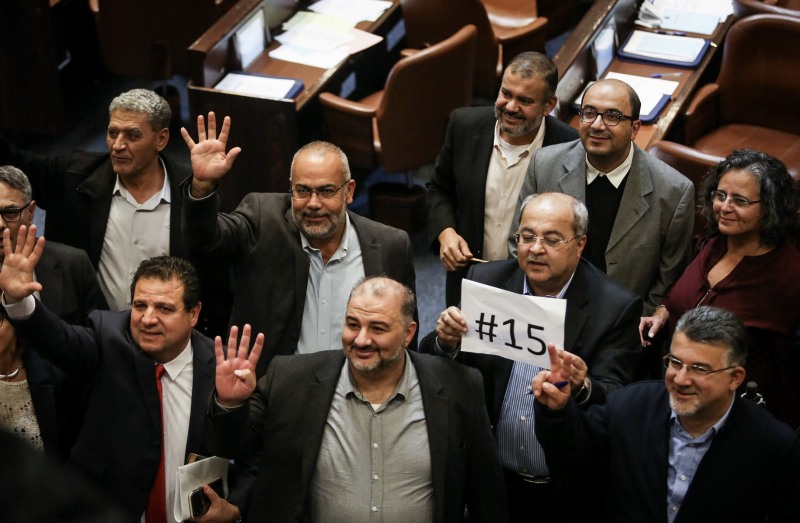
The question, then, is not whether the Arab vote matters — virtually everyone in Israeli politics now behaves as though it does. The question is who can mobilize it and prevent it from being defanged.
Can the Democrats ‘lead real change’?
The seemingly unresolvable divisions between Ra’am and the three other Arab parties — as well as the absence of a final agreement between Hadash, Balad, and Ta’al to run together, with the deadline to submit lists quickly approaching — have only deepened Palestinian citizens’ frustrations with their elected representatives. Other political parties have sensed an opportunity.
The Democrats, led by Yair Golan, began courting Arab voters well before the election campaign formally got underway. Over the past several months, Golan has repeatedly toured Arab towns, meeting with local leaders, activists, and ordinary people. He has also stepped up his Arabic-language outreach, publishing frequent videos and launching dedicated Instagram and Facebook pages aimed directly at Palestinian citizens.
In one recent post following a visit to the Palestinian city of Tamra, after 33-year-old Yasser Abu Al-Hija was murdered at his barbershop, Golan blamed the current government for the unprecedented wave of organized crime. “This government has abandoned its responsibility for the personal security of its citizens,” he wrote, promising that his party would seek control of the National Security Ministry in the next government and “lead real change.”
There is nothing new about Zionist parties campaigning in Palestinian communities; Meretz and the Labor party have long appealed to Arab voters. What distinguishes this campaign by the Democrats is the intensity of the effort, based on its apparent conclusion that the frustration over crime has created an electoral opening.
However, throughout Golan’s visits and public statements, organized crime is framed primarily as the result of government neglect and a failure of policing, while for many Palestinian citizens, the crisis is inseparable from decades of state policy toward the Palestinian minority. It also remains to be seen whether the Democrats treat Palestinian citizens merely as voters whose support can help replace Netanyahu, or as a national minority struggling not only against crime but also to achieve civic equality and an end to the Israeli occupation.

The Democrats’ slate includes Somaya Bashir, a Palestinian woman from Jatt who reached the 10th place in the party’s primaries, allowing the Democrats to present themselves as serious about Jewish-Arab partnership. But some of Bashir’s positions are also deeply controversial within Palestinian society, including her support for national-civil service for Arab citizens, which many view as an effort to integrate Palestinians into state institutions at the expense of Palestinian collective identity.
Abbas is not especially alarmed by the Democrats’ campaign. “I believe this will remain very limited,” he told +972, noting that support for Zionist parties among Arab voters in recent elections has remained around “10 to 12 percent, not more.”
The larger threat, in his view, is abstention. “What worries me much more is the attempt to influence Arab citizens through punishment or boycott.”
Abu Shehadeh is more critical. He sees the Democrats’ outreach as a direct attempt to exploit the Arab parties’ internal crisis. “The Democrats are running a very large campaign because we are busy fighting each other instead of working with one voice and pushing in one direction — to prevent Zionist parties from returning to our society,” he said.
‘We will not burn votes’
A different challenge comes from A Place for Us All, the new Jewish-Arab party launched by Standing Together leaders Rula Daoud and Alon-Lee Green.
This decision marked a significant shift for Standing Together, which had long insisted that it was a grassroots movement rather than an electoral project. It also places the new party on political terrain already occupied, at least in principle, by Hadash.
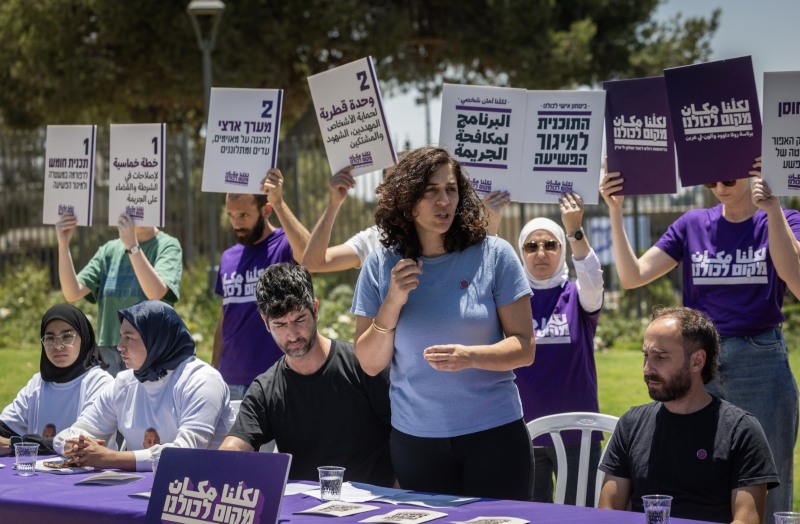
Daoud rejects the suggestion that the new party will simply take votes from the established Arab parties. “We are not stealing, as they say, from the Arab parties,” she told +972. “We are expanding the pie. We are reaching people who have decided not to vote because they are disappointed with politics and politicians.”
Daoud also insists that the party understands the risk of wasting votes under Israel’s electoral threshold. “We want to do everything to enter the next Knesset, but we will not burn votes,” she said, hinting that they will pull back if they see that they are not reaching the required threshold.
The harder question is what, beyond style and organizing strategy, A Place for Us All offers that is politically distinct. Much of its stated platform — Jewish-Arab partnership, ending the occupation, fighting crime, equality, and social justice — overlaps substantially with Hadash’s traditional program. When I asked Daoud what the new party would actually do differently in the Knesset, she mostly avoided the question and returned to the point about energy, grassroots organizing, and reaching people who lost faith in politics.
Bringing in new voters is not meaningless in a society where political alienation is so prevalent. But it remains to be seen whether A Place for Us All can actually do so, rather than redistribute votes within an already fragmented Palestinian camp. What is certain is that the party is by and large focusing on the Arab vote: As Makladeh put it, breaking into Jewish Israeli society and shifting it leftward has become almost impossible.
Makladeh once argued that Arab politics had little room for another party — but not anymore. “When there is a Joint List, there is no space for anyone,” he said. “But when there is division, there is space for every new party, not only Standing Together.”
Indeed, fragmentation does more than just risk wasting votes below the electoral threshold or depressing turnout; it creates political space for other actors to redefine what representation of Palestinian citizens should look like.
Jabareen, for his part, sees that prospect as another argument for building unity. “Personally, I have not lost hope that there will be a four-party Joint List,” he said. “The political scene in Arab society does not need another party; every adventure of creating new parties will harm our ability to bring down the far right.”
The battle over the Arab vote, in that sense, is no longer taking place only within Arab politics. It is increasingly being fought around it: Palestinian citizens are powerful enough that virtually every political camp is now calculating how to mobilize, contain, suppress, or capture their votes. For voters like those who responded to Obada Shibly’s viral appeal, that power makes the absence of a unified Joint List all the more frustrating.
When I asked Abu Shehadeh how Arab parties should explain their division to a public for whom unity appears to be the obvious answer, he did not take issue with the framing. “There is nothing to explain to people,” he said. “The people are right.”
[Samah Watad is a Palestinian journalist and investigative researcher based in Israel, covering politics and social issues.]
If you believe these stories are important, become a +972 member today to make sure we can keep telling them.
For those who care deeply about the people living between the Jordan River and the Mediterranean Sea, this is your opportunity to move from despair into action.
The effects of Israel’s genocidal assault on Gaza are still being felt: much of the Strip lies in ruins, millions remain displaced with nowhere to return to, tens of thousands have been killed, and many more are believed to be buried beneath the rubble.
In the West Bank, the Israeli army has displaced tens of thousands of Palestinians from refugee camps, while state-sponsored settler violence is wiping rural communities off the map on a weekly basis. At the same time, Israel’s ever-escalating regional aggression threatens to drag the entire Middle East into the inferno.
We are here on the ground — from Gaza to Tel Aviv to Masafer Yatta — exposing the crimes, reporting the horrors, and amplifying the voices of those resisting injustice to an audience of millions around the world. If there was ever a time the world needed +972 Magazine, it is now.
As a binational team based in Israel-Palestine, we are best placed to cover this pivotal moment in a way that no other outlet can — but we need your help to do it. Join us as a member to become part of our mission, and support independent journalism that really makes a difference.
Spread the word