
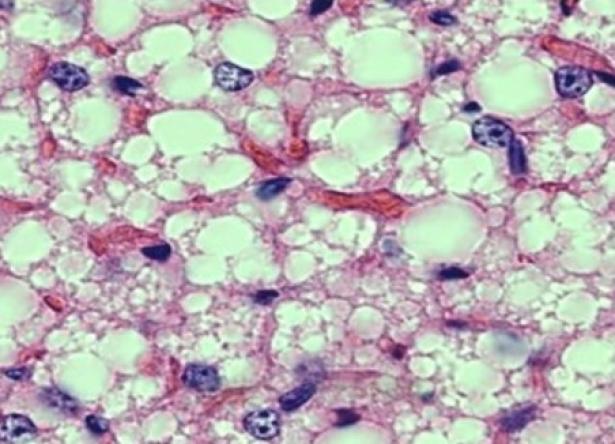
When people think of fat, they typically picture the jiggly tissue around the belly that stores extra calories. That’s white fat. But there’s another type, called brown fat, that does the opposite. Typically found around the neck, armpits and in the chest, brown fat burns calories to generate heat and has been linked to health benefits.
A study of more than 100,000 people — the largest of its kind — is now expanding that list of benefits. It revealed that people with ‘active’ brown fat are less affected by a number of health issues, including type 2 diabetes, depression and anxiety, than are those without it. Researchers used an artificial-intelligence model to quantify, from scans, the participants’ active brown fat, which is fat that is ‘turned on’ and burning calories. They concluded that the more active brown fat people have, the greater the protection they have from disorders and diseases.
The findings were published today in Nature1.
“This is one of the most comprehensive and, probably, significant works in the field,” says Shingo Kajimura, a molecular biologist at Harvard Medical School in Boston, Massachusetts.
Because this is a retrospective study, more work is needed to prove that brown fat is indeed causing all these benefits, says Irfan Lodhi, a molecular biologist at Washington University in St. Louis, Missouri. “But it’s still a very interesting and surprising study,” he says.
Turning up the heat
Scientists have known for decades that brown fat burns calories to produce heat. The fat helps newborns to stay warm, and scientists thought it vanished after babies developed the ability to shiver. But in 2009, researchers reported the discovery of brown fat in human adults for the first time2,3,4.
To map active brown fat in people, scientists use imaging techniques that highlight metabolically active tissue. They inject people with a type of radioactive glucose, and use a combination of positron emission tomography (PET) and computed tomography (CT) scans to reveal which tissues are taking up the glucose — highlighting where brown fat is activated.
These techniques are typically also used to diagnose and monitor cancer. So, a team led by Paul Cohen, a physician-scientist at the Rockefeller University in New York City, partnered with Memorial Sloan Kettering Cancer Center, also in New York, to obtain data from more than 100,000 people who had these scans while going through treatment there.
The researchers first put people into two categories: those who had active brown fat at the time of their scans and those who didn’t. Then they looked at participants’ electronic health records and found an association between having active brown fat and having a lower risk of type 2 diabetes, high blood pressure and several other cardiovascular diseases. This confirmed the findings of a smaller study from Cohen and his colleagues in 20215. The latest study, however, looked beyond metabolic conditions and found that brown fat might also protect against mental-health conditions such as depression, which came as a surprise to the authors.
Chilling out
The mechanisms through which brown fat could prevent psychiatric conditions are not clear. Some studies suggest that people with cardiovascular disease and metabolic dysfunction are at a higher risk of developing depression and anxiety, says co-author Nicolás Gómez-Banoy, a physician-scientist also at the Rockefeller University. “A potential explanation is that, because people with brown fat have a healthier metabolic profile, they will have less psychiatric issues,” he says.
Not much is known about how to boost brown-fat activity, either. Studies have shown that exposure to cold can activate brown fat6. “But most people don’t like to be cold,” Cohen says, so it isn’t a solution that would be practical for many beyond those who enjoy cold-water swimming. One drug, called mirabegron, that is used to treat urinary incontinence, has been shown to activate brown fat, but it comes with cardiovascular side effects.
The authors analysed drugs that study participants had been prescribed, and they looked for potential associations with brown-fat activity. They found a positive association with drugs used to lower blood pressure called angiotensin receptor blockers. The researchers tested one drug of this type, called losartan, in cells and in mice, and found that it boosts the activity of brown fat.
“The dream is that we can use these kinds of data as a platform for not only learning new biology, but maybe repurposing already-approved drugs to activate brown fat in humans and leverage the benefits that come from that,” Cohen says.
doi: https://doi.org/10.1038/d41586-026-03302-w
Listen to a related podcast that discusses this brown fat study: ‘The world is closer to a major conservation target than scientists thought’
References
-
Gómez-Banoy, N. et al. Nature https://doi.org/10.1038/s41586-026-11162-7 (2026).
-
van Marken Lichtenbelt, W. D. et al. N. Engl. J. Med. 360, 1500–1508 (2009).
-
Cypess, A. M. et al. N. Engl. J. Med. 360, 1509–1517 (2009).
-
Virtanen, K. A. et al. N. Engl. J. Med. 360, 1518–1525 (2009).
-
Becher, T. et al. Nature Med. 27, 58–65 (2021).
-
Huo, C. et al. Front. Physiol. 13, 917084 (2022).
Spread the word