Trump’s Threat to Investigate American Voters is a Danger to Democracy

Liz Kennedy and Danielle Root Center for American Progress
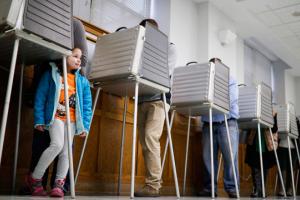
In a country where nearly 93 million eligible Americans did not vote in the 2016 presidential election, government officials should be investigating how to make the nation’s electoral process more inclusive, rather than searching for ways to place additional burdens on eligible Americans’ access to the polls.
Tidbits - January 26, 2017 - Reader Comments: Standing Against Trump - Defending Immigrants and the Massive Women's March; How Big Were the Marches; The '60s-Years that Changed America-Carnegie Hall Festival; and more...

Portside
Reader Comments: Standing Against Trump - Defending Immigrants and the Massive Women's March; How Big Were the Marches - links to local stories; March Size and City Population - Who Had the Best Turnout?; Marching in Pensacola, Florida After the Hurricane; Elizabeth Gurley Flynn-The Rebel Girl; Announcements: Fighting Fascism-Remembering the Abraham Lincoln Brigade; The '60s-The Years that Changed America Carnegie Hall Festival; and more...

Think the Women's March Wasn't Radical Enough? Do Something about it

Keeanga-Yamahtta Taylor The Guardian
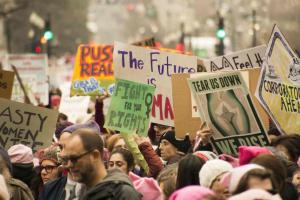
The women's marches in Washington DC and around the country were stunning, inspiring and the first of a million steps that will be needed to build the resistance to Trump. It might not have been as black, brown or working class as many might have liked. But criticizing it from the sidelines doesn't help anyone.

Women's March on Washington - Why We March, Where We Are Marching - Links for 616 Cities

Women's March on Washington
We believe that Women's Rights are Human Rights and Human Rights are Women's Rights. We must create a society in which women - including Black women, Native women, poor women, immigrant women, disabled women, Muslim women, lesbian queer and trans women - are free and able to care for and nurture their families, however they are formed, in safe and healthy environments free from structural impediments. Marches in 616 cities - full list and information.

Martin Luther King, Institutions and Power

Jared Bernstein The Washington Post
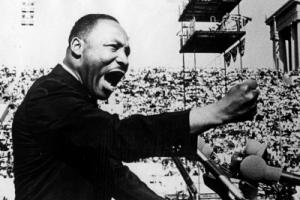
Honoring King's vision and legacy thus requires not simply remembering his most well-known dream: a racially inclusive society very different from the one that existed in his, or sadly, our own time. It requires recognizing the need to redistribute the power from the oppressive, exclusionary institutions, many of the same ones - housing, schools, criminal justice, the economy - he fought for until the day he was taken from us. What does honoring that vision mean today?

books

When Labor Fought for Civil Rights

Rich Yeselson Dissent Magazine
In reviewing two new books on the 20th Century's intertwined histories of labor, the Democratic Party, the Civil Rights movement, and the African American people, Rich Yeselson offers a nuanced and deeply informed assessment of this complicated tale.

Next Time Trump Bashes Mexico, Remember This

Michael Hogan History News Network
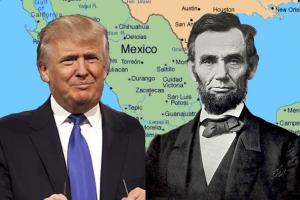
Many US historians have advanced the theory that Lincoln spoke against the war for political reasons, subsequent speeches disprove that theory as do his letters to his law partner, William Herndon. He railed against the war a second time a month after his famous “spot resolutions” over objections of the younger members of his party, and even voted for an amendment condemning the war which was tacked on to a resolution honoring war hero Zachary Taylor, who would be next

Smooth-Talking Jeff Sessions Can't Hide Disturbing Record

Marjorie Cohn Truthout
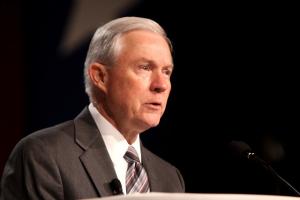
1,424 law professors from 180 different schools in 49 states (Alaska doesn't have a law school), including this writer, signed a letter to Senators Charles Grassley and Dianne Feinstein of the Senate Judiciary Committee, stating, "Nothing in Senator Sessions' public life since 1986 has convinced us that he is a different man than the 39-year-old attorney who was deemed too racially insensitive to be a federal district court judge."

books

The Captive Aliens Who Remain Our Shame

Annette Gordon-Reed The New York Review of Books
The author argues that a key factor in unifying the fractious 13 colonies in opposition to British rule during the Revolution was the patriots' effort to link British oppression to extant colonial fears about insurrectionary slaves and homicidal Indians. America's founders were chief among those spreading tales of British agents inciting blacks and Indians to take up arms against the American rebellion, making racial prejudice a foundation stone of the new republic.
Subscribe to Racism